
Key Points:
- Do not let a driver run a load until the pre-employment steps are complete: driver qualification file, a full pre-employment Clearinghouse query with a “not prohibited” result and a verified negative pre-employment DOT drug test.
- A driver who drives your truck full-time under your dispatch is very likely a W-2 employee under the IRS control tests, whatever a contract calls them. A genuine contractor model means an owner-operator with their own truck and financial risk.
- Current market guides put typical company-driver CPM around 45 to 75 cents per loaded mile. Quote the pay basis plainly and put detention, layover and breakdown pay in writing.
- After hiring, the driver joins your random testing pool at FMCSA rates of 50 percent annually for drugs and 10 percent for alcohol. Run a limited Clearinghouse query at least once a year per driver; Clearinghouse queries cost $1.25 per query under FMCSA's published query plans.
- Your insurer is a silent partner in the hire: confirm the insurer will cover the driver before you promise the job.
Your first driver is the moment your business stops being a truck you drive and starts being a company other people depend on. That is exciting. It is also where a small carrier can take on its biggest risk in a single afternoon: the wrong person in your truck, on your authority, under your insurance, hauling a customer's freight.
Most first hires go wrong for ordinary reasons: the owner is in a hurry because freight is waiting, the applicant sounds confident and the paperwork gets promised for later. Then comes a crash, an inspection, or an audit. The file that should have protected you is empty. This guide walks through hiring in the order that protects you: define the job, set sustainable pay, screen properly, complete federal paperwork before the first load and run a first week that tells you the truth about the driver. It covers a first company driver; leasing on an owner-operator shares much of the safety paperwork but needs its own pay and tax agreement.
Decide the Job Before You Advertise It
Write the job down before you talk to anyone. A vague posting — "need driver, good pay, must be reliable" — attracts everyone and tells a good driver nothing. A specific posting filters for you.
Start with freight, lane and home time, stated honestly: out two weeks and home two days, out five days and home weekends, or home nightly. Drivers leave over home-time surprises more than over small pay differences, so do not oversell this part. State equipment and expectations too — tractor and transmission, trailer type, no-touch versus driver loading, tarping or temperature checks and how ELD and dispatch communication work. A driver who has only run automatic dry van should not discover on day one that the job is manual flatbed with tarps.
Then set minimum qualifications and hold them: a valid CDL with the right class and endorsements, a current medical certificate from a National Registry examiner and a driving record you can insure. Your insurer is a silent partner in this hire — if it will not cover a driver, or only at a price that kills the margin, that driver is not viable, however good the interview felt. Call your agent with the applicant's record before you promise the job, not after. The under-21 interstate route is closed: the Safe Driver Apprenticeship Pilot Program ended with 76 drivers.
Finally, write down who assigns loads, how refusals are handled, what happens when hours run out and who the driver calls at night. A driver who does not know the chain of command will improvise. Improvisation is where service failures start.
What to Pay: CPM, Salary and the Costs Behind the Rate
Most over-the-road company drivers are paid cents per mile (CPM). Current market guides put typical company-driver CPM around 45 to 75 cents per loaded mile depending on experience and freight, with specialized loads such as hazmat, tanker, or oversized reaching 85 cents or more and over-the-road annual pay commonly described around $65,000 to $90,000. Use those ranges as a market check, not a promise: your lane, miles and freight decide actual earnings.
CPM has a trap: drivers are usually paid on loaded, practical, or hub miles, while the truck also runs empty miles. At 15 percent deadhead, a 60-cent loaded-mile rate is really about 51 cents per mile driven. Quote the basis plainly and show a sample week at realistic miles, not your best week ever — a driver who discovers the basis in week two feels misled. Misled drivers quit.
Accessorial pay matters more than owners expect. Detention, layover and breakdown pay, plus safety and mileage bonuses, compensate drivers for time CPM does not cover. Waiting six hours at a receiver without detention pay is unpaid work. Drivers remember it. Keep a short written list: what triggers each payment, how much and when it is paid.
Salary and hourly pay suit some jobs better. Local and dedicated work with predictable hours often pays better hourly or weekly, because miles vary and waiting time is large. If your work is irregular, consider a guaranteed weekly minimum: it costs you in slow weeks but buys retention. Retention is cheaper than repeating advertising, screening, testing and training for a rehire.
Now the cost behind the rate. Your true cost is not just CPM: it includes the employer share of payroll taxes, workers' compensation, unemployment insurance, benefits if you offer them and payroll administration. Price the job from your own numbers — realistic weekly revenue minus fuel, insurance, maintenance, truck payment and all driver costs. If nothing is left, the problem is the freight rate or the truck's costs, not the driver's pay request.
W-2 Employee or 1099 Contractor: Get This Right First
This decision causes the most expensive trouble for new carriers. A company driver who drives your truck, on your schedule, under your dispatch control, hauling freight you assign, is very likely an employee, paid on a W-2, even if both of you prefer a 1099 arrangement and even if a contract calls the driver a contractor. The IRS looks at behavioral control, financial control and the type of relationship — who controls the work, who bears financial risk and whether the work is central to your business — not at the contract label. A signed agreement does not override that test. A driver having an LLC does not change it.
A genuine contractor in trucking is usually an owner-operator: someone who owns or leases the truck, pays their own expenses, bears profit and loss risk and can accept or decline loads. Leasing such an operator onto your authority triggers FMCSA truth-in-leasing rules. You still owe safety oversight, including qualification and drug testing, for anyone under your authority. Misclassification exposure includes back payroll taxes, interest and penalties and wage claims. Some states, notably California under its ABC test, make contractor status harder still.
The practical rule is simple: if the driver drives your truck full-time under your dispatch, hire them as a W-2 employee, withhold taxes, pay employer payroll taxes, carry workers' compensation and pay unemployment insurance, building those costs into the rate before you advertise. If you want a contractor model, get legal advice first and structure a genuine owner-operator lease, not a relabeled company-driver job.
Where to Find Drivers and How to Screen Without Fooling Yourself
Good drivers are rarely found by posting the same ad everyone else posts. Try local CDL schools, state workforce boards, trucking job boards and referrals from drivers you trust — a recommended driver has already passed one filter. Pay any referral bonus only after 90 days, so you reward retention, not introductions.
Screen in stages and do not skip a stage because you like someone: application, license and medical verification, motor vehicle record review, Clearinghouse query and drug testing, previous-employer safety history and road test. The application is a federal document, not a formality — keep it in the driver qualification file and ask about gaps and short stays rather than waving them past.
Obtain the motor vehicle record from each state that licensed the driver in the past three years, within 30 days of hire and review it yourself. Look for suspensions, DUI and drug offenses, serious violations, at-fault crashes and patterns such as repeated speeding. One old minor violation is a conversation; a recent pattern is a decision. Compare the record against what the driver told you: a driver who hides a suspension in the interview will minimize other things on the road.
Within 30 days of hire, request safety performance history from the driver's DOT-regulated employers over the past three years; the drug and alcohol portion for FMCSA-regulated employers runs through the Clearinghouse. A former employer that will not respond is not a pass — document your attempts, because an auditor will ask what you did, not just what you received.
Ask former employers about preventable crashes, hours-of-service compliance, equipment care, communication and the reason for leaving and listen for hesitation as much as for answers.
The Paperwork: Driver Qualification File, Clearinghouse and Drug Testing
Do not let a driver run a load until the pre-employment steps are complete. That sentence is the whole section in one line. Most violations come from ignoring it under pressure.
The driver qualification file, required under 49 CFR 391.51, proves you checked this driver before putting them in your truck. It holds the employment application, motor vehicle records, road test certificate or an accepted equivalent such as a valid CDL for the vehicle type, medical certificate information and any variance and the annual record and review note. Keep one organized file per driver, physical or digital — scattered paperwork reads as no paperwork in an audit.
Before the first dispatch, run a full pre-employment query in the FMCSA Drug and Alcohol Clearinghouse and get a "not prohibited" result with the driver's electronic consent. The Clearinghouse records violations including positive drug tests, alcohol tests at 0.04 or higher and refusals. A driver with an unresolved violation must not perform safety-sensitive functions. After hiring, run a limited query at least once a year per driver and a full query within 24 hours if a limited query returns information.
Before a new driver operates a commercial motor vehicle, you must hold a verified negative pre-employment DOT drug test result — a proper collection and laboratory test, not a clinic quick screen. Federal rules do not require a pre-employment alcohol test, but if you do one, apply it consistently. After hiring, the driver joins your random testing pool: current FMCSA random rates are 50 percent annually for drugs and 10 percent for alcohol. For a first hire, run this through a consortium or third-party administrator rather than alone and keep selection genuinely random and documented, including for you if you also drive under your own authority.
After hiring, the driver joins your random testing pool: current FMCSA random rates are 50 percent annually for drugs and 10 percent for alcohol.
Medical qualification is separate and just as gating. The driver must hold a current medical certificate from a National Registry examiner; verify it, file the information and diary the expiration date yourself — an expired medical card means a medically unqualified driver. Using one can fail a new-entrant audit on its own. Check the CDL the same way: class, endorsements, restrictions and expiration. A license that does not cover the vehicle or freight is not a license for that load.
Add the remaining onboarding paperwork in the same week: Form I-9, state new-hire reporting, tax withholding forms, direct deposit, emergency contacts and signed acknowledgments of your safety, hours-of-service, phone-use, drug and alcohol, accident-reporting and inspection policies. Give the driver a copy of every policy they sign. Set up their ELD account and training, a fuel card with limits, a paperwork system and a predictable payroll cycle — drivers paid late leave. They tell other drivers.
The Road Test and the First Week
A valid CDL can stand as a road-test equivalent in some circumstances, but run your own road test anyway and keep the certificate. In one hour you learn what no paper record shows: does the driver do a real pre-trip, manage space and turns in traffic, back into a dock cleanly and report defects early? Score it in writing with the examiner's name, date and vehicle type and file it.
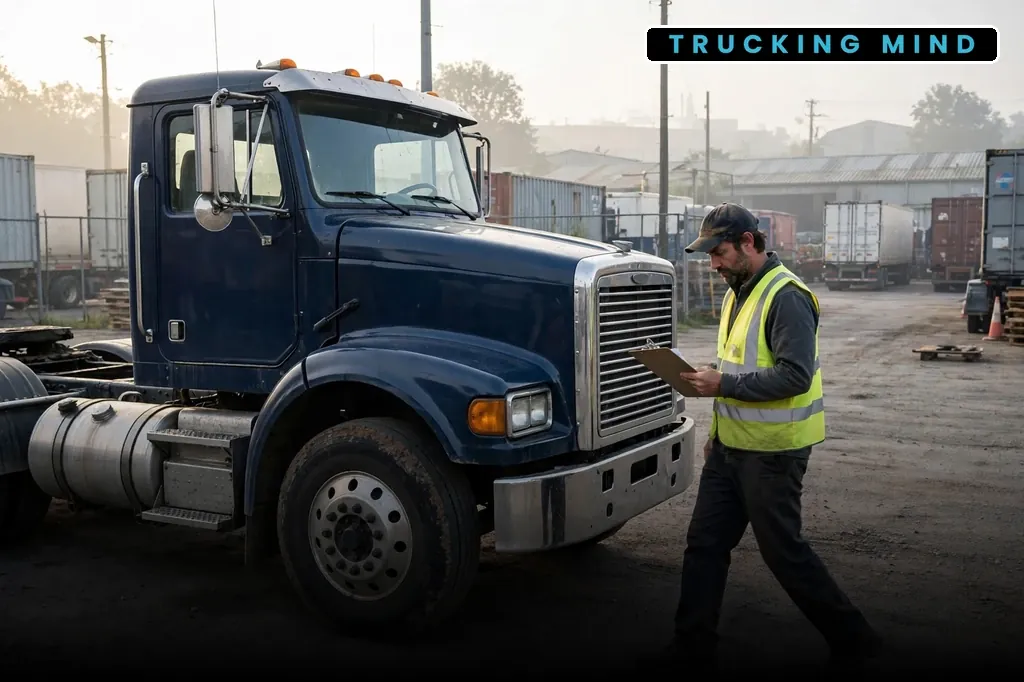
Treat the first week as a supervised trial. Start with a load and lane you know, ride the first pre-trip and delivery if you can and watch for trouble habits: skipped inspections, rushed paperwork, hidden delays and hours-of-service limits treated as suggestions. Praise defect reporting out loud — a driver who reports a small air leak on day two just saved you a breakdown.
Hold written 30-day and 90-day check-ins covering ELD logs, inspections, fuel economy, on-time performance, communication and incidents. Coach fixable problems specifically, with a recheck date. Act at once on dishonesty, drug or alcohol issues, reckless driving, or repeated hours violations after coaching: keeping a bad driver because replacing them is inconvenient is how a small carrier ends up with a crash it saw coming.
Red Flags: When to Walk Away
Walk away, politely and without a long explanation, when any of these appear. A single flag may be explainable; a pattern is a decision.
A record that does not match the story. An unmentioned suspension, DUI, or serious violation, or gaps the driver cannot explain, is a truthfulness problem before it is a driving problem. You are trusting this person with your truck, your authority and other people's lives.
A prohibited Clearinghouse status or refusal to consent to a query. There is no workaround: a driver who will not consent cannot be hired for safety-sensitive work. A prohibited driver must complete return-to-duty first. Do not accept promises that paperwork is "being cleared up."
No verifiable recent driving, or a license that does not fit the job. Long gaps, a class or endorsement short of the freight, or restrictions barring your operation are not training opportunities for a first hire.
Blaming everyone else. Every former employer unfair, every crash the other driver's fault, every ticket a trap — as a pattern, this predicts a driver who will not report their own mistakes. Unreported mistakes become your audit findings and claims.
Pressure to skip the process. "I can start tonight, skip the drug test paperwork." "Don't call my last company." Every such request asks you to carry risk for someone else's convenience. The process finishes first; the load waits.
Money as the only topic. A driver who negotiates only CPM and never asks about home time, equipment, lanes, or breakdowns will leave for the next carrier's CPM offer. Pay fairly, but hire the driver who asks about the whole job.
Disrespect for equipment. Skipping the pre-trip, ignoring a defect, or indifference to a damaged cab previews how your truck will be treated when you are not watching.
Unstable communication. A driver unreachable during hiring will be unreachable when a load is late and a customer is calling. Communication is a safety system, not a courtesy.
Keeping a Good Driver Once You Have One
Keeping the driver is cheaper than hiring the next one. Pay on time with a settlement sheet the driver can understand. Fix reported defects promptly and say so — nothing destroys trust faster than a brake issue reported twice and ignored. Keep home-time promises even when freight tempts you, hand over a truck you would drive yourself, recognize safe miles and clean inspections specifically and listen when the driver flags a bad shipper or dangerous dock before defending the load.
Frequently Asked Questions
What paperwork must be complete before my first driver hauls a load?
Driver qualification file basics, a full pre-employment Clearinghouse query with a "not prohibited" result, a verified negative pre-employment drug test, a valid CDL with the right class and endorsements and a current medical certificate. If any is missing, the driver does not drive. For the full starting picture, see How to Start a Trucking Company in 2027: Complete Step-by-Step Guide.
How much should I pay my first company driver?
Market guides put typical company-driver CPM around 45 to 75 cents per loaded mile, specialized freight higher, but your number must come from your own math: realistic revenue minus fuel, insurance, maintenance, truck payment, payroll taxes, workers' compensation and compliance costs, on a clearly stated pay basis plus written detention, layover and safety terms.
Should my first driver be a W-2 employee or a 1099 contractor?
If the driver drives your truck under your dispatch control on your schedule, they are very likely a W-2 employee under IRS control tests, whatever a contract calls them. A genuine 1099 arrangement usually means an owner-operator with their own truck and financial risk under a proper lease. When in doubt, get employment-law advice before the hire.
What is a driver qualification file?
The federally required folder proving you verified a driver before and during employment: application, motor vehicle records, road test certificate or CDL equivalent, medical information and annual driving-record reviews. It is one of the first things an auditor examines.
How long does hiring a driver take?
Allow at least a week, often two, for advertising, screening, record and previous-employer checks, the Clearinghouse query, drug testing, the road test and insurer approval. Compressing it into a day is how a step gets skipped.
What if my insurer will not cover a driver I want to hire?
Then that hire does not work at that price, or at all. Ask what would change the decision — time since the violation, training, a different assignment — and decide if that path is realistic. Never put an unapproved driver in the truck and hope the insurer never asks.
Can I hire a driver with a past violation?
Sometimes. A single old minor violation with a clean record since differs from a recent pattern of serious violations. Weigh the type, recency, what the driver has done since and what your insurer accepts and document the reasoning.
Do I need a consortium for one driver?
You need a compliant testing program including random testing, which for a one-driver carrier practically means a consortium or third-party administrator — and it covers you too if you drive under your own authority. Learn the difference between the two numbers that govern this area in MC Number vs DOT Number: What New Carriers Actually Need.
The Bottom Line
Hire slowly, pay honestly and finish the paperwork before the first load. Decide the job, set pay from your own costs, classify the driver correctly, screen through records rather than impressions and walk away from red flags without apology. Your first driver sets the standard for every driver after them. Get it right and the second hire gets easier; get it wrong and you will spend the next year paying for one rushed afternoon.
This guide was prepared in good faith from official sources, including FMCSA and state agency publications, and was checked at the time of writing. Fees, rules and procedures change. Errors and omissions are excepted. Please confirm current requirements with the relevant agency before filing or travelling. If you spot anything that needs correcting, email us at contact@truckingmind.com — we will verify it and update this page.