Key Points:
- South Carolina runs two systems: PSC/ORS Class E certificates for intrastate household goods and hazardous waste, plus SC Ports terminal rules for Charleston drayage — neither substitutes for the other.
- A Class E application fails without a complete tariff: cover sheet, application, tariff, notarized signatures, Secretary of State entity documents and a compliant insurance quote all go in together.
- The ORS minimum limits for household goods carriers are $500,000 vehicle liability under 10,000 pounds GVWR and $750,000 at or above it, with cargo cover of $2,500 per vehicle and $5,000 per occurrence.
- General freight for hire needs the SCDMV Class E Certificate of Compliance under section 56-3-661 — a one-time $25 credential — not the PSC Class E certificate.
- Charleston gate access runs on GO!Port: every container or chassis move at Wando Welch and North Charleston needs a Gate Code. Drivers need a TWIC for unescorted access to restricted areas.
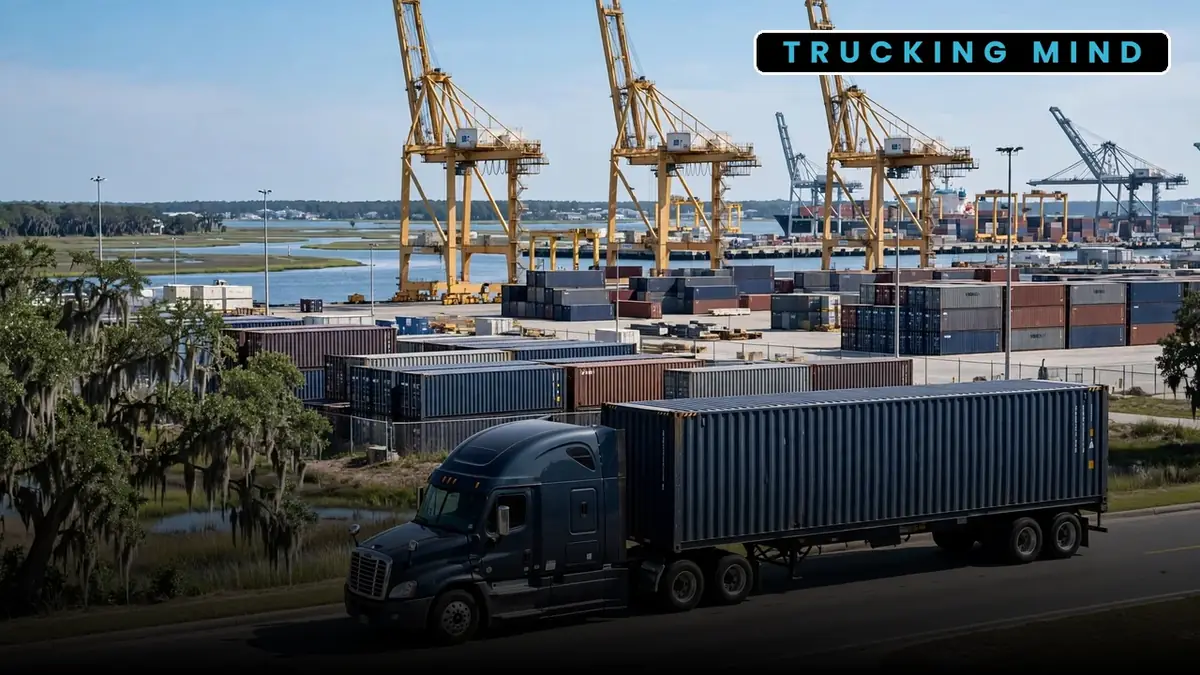
South Carolina offers a new owner-operator two different businesses under one state line: ordinary intrastate freight across the Upstate, Midlands and Lowcountry and container drayage in and out of the Port of Charleston, one of the busiest container gateways on the Southeast coast. The two businesses answer to different gatekeepers. Intrastate household goods authority runs through the Public Service Commission of South Carolina (PSC) and the Office of Regulatory Staff (ORS). Port access runs through the South Carolina Ports Authority (SC Ports), federal maritime security rules and the steamship lines and terminal operators that control appointments, chassis and container releases. A carrier that masters only one side will be stopped by the other. This guide covers both for 2027 operations: South Carolina intrastate permits, oversize rules and the Charleston drayage requirements that decide whether your truck gets through the gate or turns around at it.
Intrastate vs. Interstate in South Carolina
A load picked up and delivered inside South Carolina, with no interstate leg, is intrastate. A load that crosses a state line, or forms part of a through interstate movement, is interstate — and that includes many Charleston loads. A container that arrives by ship in Charleston and is trucked to Charlotte, Atlanta, or Savannah is moving in interstate commerce even though the truck leg starts in South Carolina, because the container's journey began overseas and continues across state lines. Do not assume that a load starting at a South Carolina port is intrastate freight. It usually is not.
Interstate for-hire work requires federal operating authority from the FMCSA, an MC number, a BOC-3 filing and FMCSA insurance filings. Intrastate for-hire household goods work requires a South Carolina Class E certificate, described below. A USDOT number is required for interstate work and is the safety identifier for intrastate work as well. South Carolina is one of the states the FMCSA lists as requiring intrastate commercial motor vehicle registrants to obtain a USDOT number. The South Carolina Business One Stop trucking guide states the same requirement for vehicles rated at 10,001 pounds or more, hazardous materials carriers requiring a safety permit and passenger operations at the federal thresholds. If you plan to run both Charleston drayage and South Carolina-only freight, expect to hold both federal authority and any applicable state certificate and to keep their renewals on separate tracks.
The Two Agencies Behind a Class E Certificate
Applying for a Class E certificate involves two South Carolina agencies. Confusing their roles is the most common reason applications stall. The Public Service Commission of South Carolina is the adjudicating body: you file the application with the PSC Clerk's Office. The PSC issues the order granting authority. The Office of Regulatory Staff is the staff and certification arm: ORS Transportation Department handles the certification process, reviews compliance material and issues the certificate itself after PSC approval. Questions about completing the Transportation Cover Sheet or application go to the PSC Clerk's Office at 803-896-5100. Questions about the certification process go to ORS Transportation at 803-737-0800. Send the application to both offices in the form the current instructions require — mailed, emailed in PDF format, or faxed — and keep proof of each submission.
A Class E motor carrier is a carrier that uses a vehicle to transport property in the form of household goods or hazardous waste for disposal, including goods packed by a packing service. A Class E carrier must obtain a Certificate of Public Convenience and Necessity (PC&N) from ORS after approval by the PSC. There is one important exception: for-hire household goods carriers operating exclusively within the limits of a single municipality in South Carolina obtain a Certificate of Fitness, Willingness, and Ability (FWA) instead of a Certificate of PC&N. A carrier that starts inside one city and later expands statewide must not assume its municipal certificate expands with it; the scope of authority is part of the certificate. Operating beyond it is operating without authority for that territory.
Applying for Class E Authority, Step by Step
Step one is completing the Transportation Cover Sheet and the Class E application in full, with the business name used consistently throughout. Inconsistency — a trade name on one page, a legal name on another, a different spelling on the tariff — is a classic reason for an application to be returned. Step two is attaching a complete tariff, including all rates, charges and terms and conditions. Applications without an attached tariff are considered incomplete and will be returned. Do not file a placeholder tariff and plan to fix it later; the tariff is part of the application. The rates you file are the rates you are held to.
Step three is signatures and notarization. The application must be signed as required and notarized in the appropriate area. Step four is entity documentation. If the applicant is an LLC or corporation, attach a Certificate of Existence or Articles of Organization from the South Carolina Secretary of State. If the LLC or corporation was formed out of state, attach a Certificate of Authority or the application for one from the Secretary of State. If the applicant is a corporation or nonprofit, attach the Certificate of Existence or Articles of Incorporation. Step five is the insurance quote at the application stage: the applicant provides an insurance quote meeting the prescribed minimum limits, from an insurer authorized to do business in South Carolina. You are not required to purchase the policy until the application has been approved and an order issued, but the quote must be complete and must meet the minimums.
After approval, the carrier must procure the actual insurance before any certificate can be issued and before any operations under it. For Class E carriers, cargo insurance or a cargo surety bond from a licensed or admitted insurer must be evidenced to ORS on the prescribed forms, conditioned on compensating shippers or consignees for loss of or damage to property in the carrier's possession in connection with its South Carolina transportation service. The ORS schedule of minimum limits for household goods carriers sets vehicle liability at $500,000 for vehicles under 10,000 pounds GVWR and $750,000 for vehicles of 10,000 pounds or more, with cargo cover of $2,500 for loss of or damage to property carried on any one motor vehicle and $5,000 for losses or damage occurring at any one time and place. Form E and Form H certificates of insurance are filed with ORS as the proof. Liability coverage is scaled in part to the vehicle and operation. Passenger-related limits in the same tables do not apply to a property carrier, so confirm the property figures for your exact operation rather than copying a passenger figure.
The ORS schedule of minimum limits for household goods carriers sets vehicle liability at $500,000 for vehicles under 10,000 pounds GVWR and $750,000 for vehicles of 10,000 pounds or more, with cargo cover of $2,500 for loss of or damage to property carried on any one motor vehicle and $5,000 for losses or damage occurring at any one time and place.
What About General Freight Inside South Carolina?
New carriers often ask whether general freight hauled only inside South Carolina needs a PSC certificate. The PSC's Class E system is built for household goods and hazardous waste for disposal, not for every pallet of general freight. General property carriers operating intrastate still need the ordinary safety, registration and insurance foundations — USDOT identification, vehicle registration, driver qualification, hours-of-service compliance and commercial auto liability — and interstate general freight needs federal authority. But a general freight carrier should not apply for a Class E household goods certificate it does not need, any more than a household goods carrier should haul household goods on a general freight registration.
One state credential does apply to general freight. Under South Carolina Code section 56-3-661, a for-hire motor vehicle carrier of property — other than a carrier of household goods or hazardous waste for disposal, which uses the PSC route — may not operate in this state without a Class E Certificate of Compliance from the Department of Motor Vehicles, for which a one-time fee of $25 may be charged to each company for each certificate issued. The applicant must evidence financial responsibility and satisfy the act's federal USDOT safety and hazardous materials compliance requirements before the certificate issues. A certificate can be suspended, revoked, or placed on probation for noncompliance. That DMV certificate is a compliance credential, not the PSC's Class E certificate of public convenience and necessity. The two should never be confused. The safe approach is still to describe your exact freight, lanes and customers to ORS and to the Department of Public Safety before you haul and to get the answer in writing where the rule is not clear from the published forms.
Oversize and overweight loads are a separate permit question for every kind of carrier. South Carolina's routine legal limits are 8 feet 6 inches in width, 13 feet 6 inches in height and 80,000 pounds gross weight, with an overall length limit for combinations that depends on configuration. Exceed any of them and the carrier must hold a South Carolina Department of Transportation (SCDOT) oversize or overweight permit for the move, with route, escort, flag, sign and travel-hour conditions stated in the permit. City streets add another layer: state permits do not grant blanket permission for municipal streets. A load crossing a restricted bridge or a city corridor may need a city permit or police escort in addition to the state permit. Check every municipality on the route, not just the state highway portion and build escort lead time into the quote for wide, tall, or superload moves, where SCDOT may require higher liability coverage scaled to gross weight.
Charleston Port Drayage: The Gate Is the Business
Charleston drayage is container work. Container work has its own vocabulary and its own failure modes. The terminals that matter most for container drayage are the Wando Welch Terminal in Mount Pleasant and the Hugh K. Leatherman Terminal in North Charleston, with the SC Inland Port in Greer serving as the inland rail and container link. The Leatherman Terminal was built with a direct connection for truckers to Interstate 26, which matters for dispatch planning: a terminal with a highway connection still has gate queues, appointment windows and terminal congestion. The highway leg is the easy part.
The single most important credential for port drayage is the Transportation Worker Identification Credential, or TWIC. TWIC is required for persons approved for unescorted access to secure and restricted areas of SC Ports facilities, under the Maritime Transportation Security Act. SC Ports adheres to the federal TWIC regulations and enforces them at its facilities. A driver who needs routine access to restricted areas in the course of employment, where escorting is not feasible, must hold a TWIC. A person without a TWIC who is not routinely employed on SC Ports facilities, who has a demonstrated business need to enter and who is approved by SC Ports, may enter only with an SC Ports-approved TWIC escort as a side-by-side companion, at the ratios federal regulations require. The escort must be arranged in advance of arrival. Do not arrive at the gate expecting to find an escort. Arrange it before dispatch, or do not dispatch a driver without a TWIC to a restricted terminal.
Obtaining a TWIC is a federal process through the Transportation Security Administration: biographic information, fingerprints and a security threat assessment. Enrollment to issuance takes weeks, not days, so a carrier entering drayage should start TWIC applications before signing a drayage contract, not after. Every person in the truck who needs unescorted access needs a credential; a passenger without one cannot simply ride along into a restricted area. Keep TWIC cards current, carry them on every port run and track expiration dates alongside CDL and medical certificate renewals, because a lapsed TWIC at the gate is a refused load.
SC Ports Registration, Clean Trucks and Terminal Practice
Beyond TWIC, SC Ports operates its own trucker registration and equipment programs. The details change as terminal systems are upgraded. SC Ports announced a Clean Truck Certification Program in 2013, effective January 1, 2014, requiring trucks serving container terminals to be fitted with engines manufactured in 1994 or later, with enrollment through the port's clean truck registration site and on-terminal spot checks to confirm engine compliance. The engine test is engine year, not truck model year. SC Ports still lists Clean Truck Certification among its motor carrier resources. Do not buy an older truck for Charleston work on the assumption that any truck can serve the terminals; confirm current eligibility first, in writing, with the port.
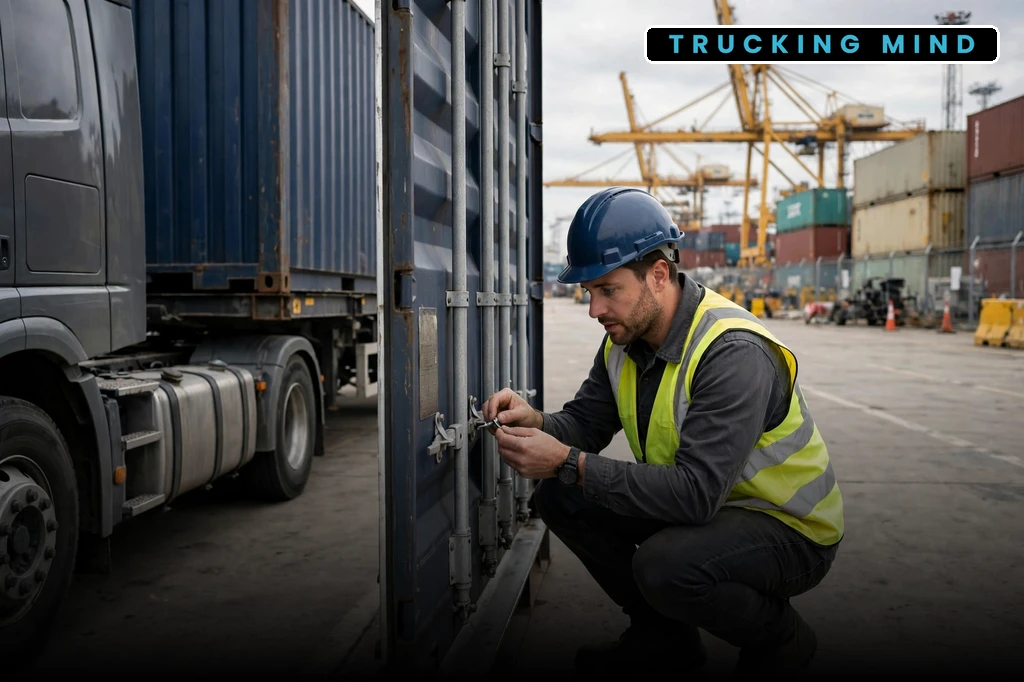
Terminal practice is where drayage profit is won or lost. Container moves require a booking number, container number, or equipment interchange document. The move must match the terminal's appointment or pre-advice system for that day. Every container and chassis move at the Wando Welch and North Charleston terminals runs through SC Ports' Advanced Gate System and requires a Gate Code. Motor carriers can obtain Gate Codes only via GO!Port, the port's free web portal. All motor carriers doing business at SCPA container facilities must register on GO!Port to generate them. The gate code is the pre-advice step, so build it into dispatch before the truck rolls. Arrive with the right container, chassis and paperwork and confirm the container is released and the chassis is in interchange condition before leaving the yard. A drayage carrier ordinarily operates under the Uniform Intermodal Interchange and Facilities Access Agreement (UIIA) for chassis interchange and must maintain the insurance and equipment standards the agreement and the equipment providers require. Inspect the chassis before accepting it — tires, lights, brakes, twist locks and container securement — because a chassis defect discovered at the gate becomes your delay. A container that is not properly secured becomes your liability.
Documentation discipline separates a drayage carrier that gets paid from one that argues about detention. Keep the bill of lading, delivery and pickup instructions, gate receipts, interchange reports and any exception notes for every move. Photograph container and chassis condition at pickup and delivery, note seal numbers and report damage or seal discrepancies before leaving the terminal, not after. Free time, detention and demurrage are set by the steamship lines and terminal tariffs, not by the trucker, so read the applicable tariff for each move and confirm who pays for waiting time when the terminal, not the driver, causes the delay. A drayage rate that looks strong on paper can evaporate in unpaid gate time. The carriers that survive Charleston are the ones that track turn times by terminal, by day and by steamship line and price accordingly.
Safety, Hours and Cargo on Port and Highway Runs
Port drayage trucks operate under the Federal Motor Carrier Safety Regulations, including hours-of-service rules: an 11-hour driving limit within a 14-hour on-duty window, required breaks, weekly on-duty limits and a 10-hour off-duty rest period before resuming driving. Terminal queue time complicates those rules, because time waiting at the gate can count against the on-duty window even when the driver is not moving freight. Plan drayage dispatches with queue time built in and do not dispatch a driver whose hours will expire inside the terminal. Pre-trip inspections are not optional for container work: brakes, tires, lights, coupling, chassis condition and container securement must be checked before the rig leaves the terminal gate. Cargo must be secured so it cannot shift or fall. Hazardous materials in containers require the proper endorsement, placarding, shipping papers and emergency response information. Not every drayage carrier is equipped or authorized for every hazmat class, so confirm hazmat authority by class before accepting a hazmat container.
Costs, Rates and Whether Drayage Pays for a New Carrier
Charleston drayage can pay well for a carrier that controls turn times, or poorly for one that does not. The revenue side includes linehaul or drayage rates, fuel surcharges, chassis charges where applicable and accessorials for waiting time, extra stops and weekend or holiday work. The cost side includes the truck and chassis, fuel, port-related registration and credential costs, TWIC enrollment, insurance at the levels steamship lines and equipment providers require, maintenance on high-cycle short-haul equipment and the unpaid time that gate queues consume. Short-haul drayage wears equipment differently from long-haul work: more starts, stops, turns and gate idling, more brake and tire wear per mile and more exposure to chassis defects. Price maintenance per move, not per mile, until you have real drayage cost data for your own operation.
Common Mistakes in South Carolina
The first mistake is hauling household goods intrastate without a Class E certificate, or hauling beyond the territory the certificate covers. The second is filing a Class E application without a complete tariff, or with inconsistent business names and losing weeks to a returned application. The third is treating a TWIC as optional for Charleston work, or arriving at the gate without one and expecting an escort to be available. The fourth is accepting a chassis or container without inspection and inheriting someone else's defect. The fifth is pricing drayage by the mile instead of by the turn and discovering that gate time ate the margin. The sixth is assuming a state oversize permit covers city streets and bridges and learning otherwise from a municipal officer. Every one of these mistakes is avoidable. Every one of them is common, which is why they are listed here rather than left to experience.
Frequently Asked Questions
Do I need a PSC certificate for all intrastate trucking in South Carolina?
Not for all freight. The Class E certificate system covers household goods and hazardous waste for disposal. General freight carriers need the ordinary safety, registration and insurance foundations and federal authority for interstate work. They also need the SCDMV Class E Certificate of Compliance under section 56-3-661 before operating for hire in the state.
What is the difference between a Certificate of PC&N and a Certificate of FWA?
A Class E carrier ordinarily obtains a Certificate of Public Convenience and Necessity from ORS after PSC approval. A for-hire household goods carrier operating exclusively within the limits of one municipality obtains a Certificate of Fitness, Willingness, and Ability instead. Operating beyond the certificate's territory is operating without authority for that territory.
What must a Class E application include?
A complete Transportation Cover Sheet and application, a complete tariff with all rates, charges and terms, required signatures and notarization, entity documents from the Secretary of State and an insurance quote meeting the prescribed minimums from an authorized insurer. Applications without a tariff are returned as incomplete.
Do I need a TWIC to haul containers out of Charleston?
Yes, for unescorted access to secure and restricted areas of SC Ports facilities. A person without a TWIC may enter only with an SC Ports-approved TWIC escort arranged in advance, as a side-by-side companion. Start TWIC enrollment through the TSA weeks before you need port access, because issuance is not same-day.
What is the difference between a USDOT number and operating authority?
The USDOT number identifies your company for safety purposes. Operating authority — federal MC authority for interstate work, or a South Carolina Class E certificate for intrastate household goods — is the permission to haul for hire. You need the right one for the freight you haul. The distinction is explained in MC Number vs DOT Number.
Do South Carolina oversize permits cover city streets?
No, not automatically. A state SCDOT permit covers the state route it states. Municipal streets, bridges and corridors may require separate city permits or escorts. Check every municipality on the route before the move.
Should a new owner-operator start in Charleston drayage independently?
It depends on your credentials, equipment and customer base. Leasing on to an established drayage carrier can provide port access, chassis and volume while you learn terminal operations. Running independently preserves rate and control but requires you to build port registration, TWIC coverage, chassis interchange and shipper relationships first. Either way, sequence credentials before contracts.
Where should a new owner-operator start overall?
Start with the operating plan — intrastate household goods, general freight, interstate work, or Charleston drayage — and let it choose the authority. The startup sequence is covered in How to Start a Trucking Company. This South Carolina guide supplies the PSC, oversize and port layers that sit on top of it.
This guide was prepared in good faith from official sources, including FMCSA and state agency publications, and was checked at the time of writing. Fees, rules and procedures change. Errors and omissions are excepted. Please confirm current requirements with the relevant agency before filing or travelling. If you spot anything that needs correcting, email us at contact@truckingmind.com — we will verify it and update this page.