Key Points:
- Interstate authority does not authorise Missouri intrastate work: for-hire carriers hauling wholly within Missouri must also hold MoDOT intrastate operating authority.
- Apply in order: USDOT number first, then the Form MO-1 application through MoDOT Carrier Express, with proof of insurance filed by your insurer on Form E and kept on file continuously.
- Carriers outside UCR pay a $10 annual licence fee per power unit and display a $10 annual renewal decal on each intrastate unit; UCR carriers skip the decal, never the authority.
- Insurance minimums for nonhazardous intrastate property are $100,000 per person, $300,000 per accident and $50,000 property damage and a lapse can suspend authority at any time.
- Report the same fleet count on the Missouri application, the MCS-150, UCR and the insurance schedule and calendar renewals 60 days early.
- Passenger and household-goods carriers add financial statements and passenger carriers may also need a formal tariff of rates and charges.
Missouri sits at the crossroads of American freight and that geography is both the opportunity and the reason to get intrastate authority right. Kansas City and St. Louis anchor distribution, Springfield and Columbia anchor regional freight and the state’s highway network carries a constant mix of through traffic and Missouri-only loads. For a new owner-operator, Missouri-only freight — a load picked up in Kansas City and delivered in St. Louis, or picked up in Springfield and delivered in Joplin — looks simple.
It is simple, once the state authority is in place. Without it, that simple load is an unauthorised haul and Missouri’s system is designed to catch it through insurance filings and renewal records, not just roadside stops.
This guide explains Missouri intrastate operating authority exactly as the Missouri Department of Transportation (MoDOT) Motor Carrier Services describes it: who needs it, how to apply through MoDOT Carrier Express, what insurance must be on file, what the annual decal means and why interstate authority does not substitute for it. It also covers the federal companions — USDOT, MC, UCR, IRP and IFTA — and the practical extras, from oversize and overweight permits to household-goods and passenger requirements, that turn a general guide into a usable checklist for 2027.
Missouri’s system has a virtue new carriers should appreciate: it is unusually clear about its core bargain. The state grants intrastate authority, the carrier keeps insurance continuously on file and the carrier renews each year and displays the decal that proves it. Carriers who honour that bargain rarely have authority problems.
Carriers who let insurance lapse, who under-report their fleet size, or who assume an interstate filing covers Missouri-only work create problems that are entirely preventable. This guide is built to prevent them.
Intrastate vs. Interstate: The Distinction That Decides Which Authority You Need
Intrastate commerce is commerce wholly within Missouri: pickup in Missouri, delivery in Missouri, with no crossing into another state and no part in a longer interstate movement. Interstate commerce crosses a state line, passes through another state, or forms part of a movement that originates or terminates outside Missouri. A Kansas City to St. Louis load is intrastate.
A Kansas City, Missouri, to Kansas City, Kansas, load is interstate, even though the cities share a name and sit minutes apart — a distinction that has tripped up more than one new carrier operating near the state line. When in doubt about a border load, check the movement, not the mileage.
Federal interstate authority comes from FMCSA. Missouri intrastate authority comes from MoDOT Motor Carrier Services.
Missouri is explicit on the relationship between them: interstate operating authority does not authorise intrastate commerce within Missouri. If you hold interstate authority and want to haul for hire inside Missouri as well, you must also obtain Missouri intrastate operating authority.
Conversely, Missouri intrastate authority alone does not authorise you to cross into Kansas, Illinois, Arkansas, or any other state. Plan for both layers if your freight touches both and keep the two files — federal and state — current on their own calendars.
If you are still working through the federal side of the business, start with How to Start a Trucking Company and MC Number vs. DOT Number. Those guides explain the USDOT number, the MC number and the federal filings in plain language.
This guide then adds the state layer on top of that foundation, so you do not mistake a federal approval for a state approval, or the other way around. That mistake is one of the most common — and most expensive — errors new carriers make, because it usually surfaces at a roadside inspection or during an insurance filing review, long after the load has already been accepted.
Who Needs Intrastate Authority in This State
All for-hire motor carriers transporting property or passengers in intrastate commerce wholly within Missouri are required to apply for authority to operate in Missouri. That covers general property carriers, household-goods carriers and passenger carriers operating for hire inside the state.
MoDOT publishes a complete list of exemptions in Missouri Revised Statute 390.030 and that statute — not a broker’s assurance or a fellow driver’s practice — is the source to check if you believe your operation might be exempt. Exemptions are specific and claiming one you do not hold is treated the same as operating without authority.
Passenger and household-goods carriers carry additional duties. Carriers transporting passengers must submit a financial statement and may also be required to submit a formal tariff of rates and charges.
Carriers authorised to transport passengers or household goods must also submit an annual financial statement. If passenger or household-goods work is part of your plan, budget extra time for those filings and confirm the exact forms with MoDOT Motor Carrier Services before you file the main application, because a missing financial statement stalls an otherwise complete application.
Step by Step: How to Get Your State Authority
Apply in this order, through MoDOT Carrier Express where possible. MoDOT Motor Carrier Services can be reached at 1-866-831-6277 for assistance.
- Get a USDOT number. Missouri intrastate authority requires a USDOT number first. Apply through FMCSA, verify that the legal name, operation type and cargo classifications match your actual business and keep the record current. Missouri is among the states that require intrastate registrants to obtain a USDOT number, so do not treat the USDOT number as an interstate-only credential.
- Create a MoDOT Carrier Express account. Applicants file through MoDOT Carrier Express at modot.org/mce. Carriers with an existing account can use the forgot-user-ID and forgot-password options on the login screen; carriers without an account complete the new-customer application and receive login credentials on approval, then continue with the operating-authority registration. Keep the user ID and password in a secure place a second trusted person can access, because a lost login at renewal time is a preventable delay.
- File the intrastate operating-authority application. Complete the application (Form MO-1) online through Carrier Express, or obtain a paper application to be mailed or faxed through MoDOT’s motor-carrier pages if you cannot file online. Report your fleet accurately: applying and paying fees for fewer vehicles than the fleet shown on your latest MCS-150 filed with FMCSA is exactly the kind of mismatch that invites audit questions. Count every power unit in intrastate commerce and reconcile the application count with the MCS-150 before you submit.
- Have insurance filed by your insurer. Proof of insurance must be submitted by your insurance company, on Form E and must remain on file continuously. Authority depends on that filing, not on a policy document in your cab. Ask your insurer to confirm the filing in writing, with the date and form and confirm that the legal name matches your application exactly.
- Pay the annual licence fee and display decals where required. Carriers not required to participate in the Unified Carrier Registration program pay an annual licence fee of $10 per power unit and authorised carriers who do not participate in UCR must obtain a yearly renewal licence decal for all power units at $10 per decal, displayed on the side of each unit involved in intrastate commerce. Carriers who also operate in interstate commerce and pay UCR fees are not required to purchase the annual regulatory decal, but they are still required to obtain intrastate operating authority. Do not confuse the decal exemption for UCR carriers with an authority exemption — there is none.
- Add passenger or household-goods filings if they apply. Passenger carriers add the financial statement and, where required, the formal tariff of rates and charges. Household-goods carriers add their annual financial statement duty. File these with the main application, not after, so the authority is not held up for a missing attachment.
When authority is granted, save the approval, the decal records and the insurance-filing confirmation together. Note the renewal date in the same place and set a reminder 60 days before it. Missouri’s annual cycle is forgiving to carriers who prepare early and unforgiving to carriers who discover a renewal the week it is due, especially if an insurance filing also needs attention at the same time.
Insurance: What Must Be on File Before Authority Is Issued
Missouri intrastate carriers are required to file proof of insurance with MoDOT and intrastate operating authority may be suspended at any time for a lapse of insurance or other program requirements. That suspension risk is the reason to treat insurance as a compliance system, not a purchase.
The filing is Form E, submitted by the insurer. For intrastate property carriers, MoDOT’s published insurance requirements set the minimum liability limits for nonhazardous freight at $100,000 for injury or death of one person, $300,000 for any one accident and $50,000 for property damage for any one accident; specified hazardous categories carry minimums of $1,000,000 or $5,000,000.
Passenger-service minimums differ again, so confirm the row for your exact operation type and cargo before binding coverage. A policy that meets a broker’s preference but not the state’s filing requirement still leaves authority exposed.
Three insurance habits protect Missouri authority. First, use an agent who files Form E routinely for Missouri carriers and who will confirm filings in writing. Second, notify MoDOT and your insurer together whenever the legal name, address, or fleet changes, so the filing and the authority record never drift apart.
Third, never allow a gap between policies: if you change insurers, confirm the new Form E is on file before the old policy cancels and keep the confirmation email. A single day without a filing on record can create a suspension problem that takes far longer than a day to repair and it can surface during a broker’s carrier vetting at exactly the moment you need a load.
Vehicle Registration, Plates and Markings
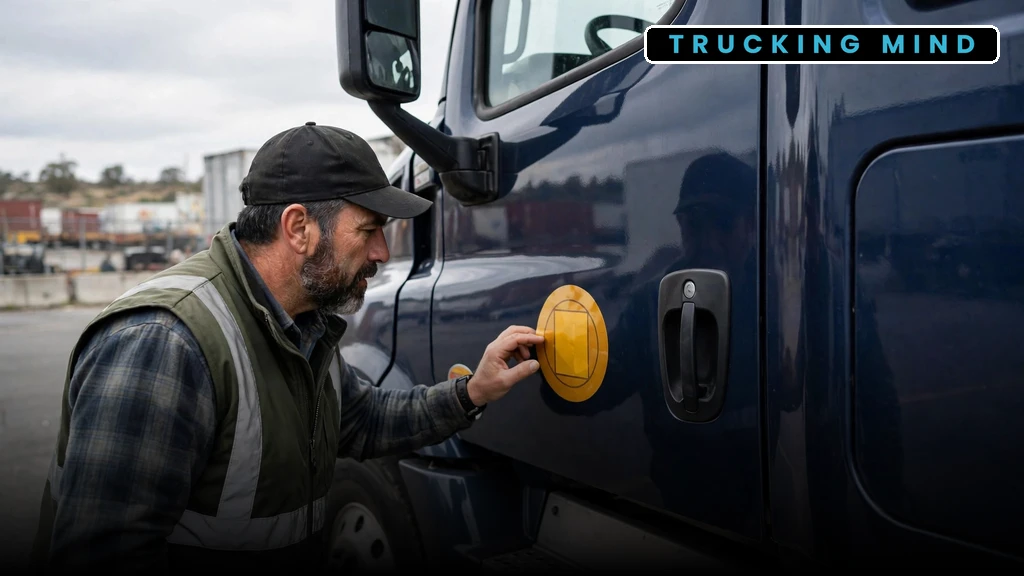
Missouri vehicle identification is the annual regulatory decal, displayed on the side of each unit involved in intrastate commerce, for carriers who do not participate in UCR. The decal is the visible proof that the unit belongs to an authorised carrier whose insurance is on file and whose annual fee is paid.
Record which decal number went on which unit, photograph the placement and renew decals for all power units each year through Carrier Express. UCR carriers are exempt from purchasing the decal, but they must still hold intrastate authority and their vehicles must still be properly registered and marked under federal and state rules.
The Federal Companions: USDOT, MC, UCR, IRP and IFTA
Even a Missouri-focused carrier usually needs the federal set sooner or later. The USDOT number is the safety identifier. The MC number is federal for-hire interstate authority where required.
The BOC-3 designates process agents. UCR requires annual registration and fees based on fleet size for interstate carriers and it is the reason UCR carriers do not need the Missouri annual decal — though they still need Missouri authority itself.
IRP apportions registration among the states you run in and IFTA consolidates fuel-tax reporting into one quarterly return for member jurisdictions. If you run only inside Missouri, IRP and IFTA may not apply yet; if you take a single interstate load, they can apply immediately, so confirm before that load, not after.
The audit lesson deserves repeating: report the same fleet everywhere. The MCS-150, the Missouri application, the UCR registration, the IRP fleet and the insurance schedule should all tell the same story about how many power units you operate.
A carrier with five trucks on the MCS-150 and three on the Missouri application invites an audit question that a carrier with five everywhere never faces. Reconcile the counts quarterly and fix discrepancies in the same week you find them.
Safety, Drivers and Day-to-Day Compliance
Safety compliance in Missouri follows the federal motor-carrier safety regulations as adopted for intrastate operations, with state enforcement through MoDOT and highway patrol channels. That means commercial driver’s licence standards, medical certification, hours-of-service rules, vehicle inspection and maintenance and drug and alcohol testing for safety-sensitive drivers all belong in a Missouri carrier’s routine, not just an interstate carrier’s. New owner-operators sometimes assume intrastate work is lightly regulated; Missouri’s insurance-continuity and annual-renewal system proves the opposite and roadside enforcement treats an intrastate truck the same as any other commercial vehicle.
Oversize, Overweight and Special Permits in Missouri
Oversize and overweight movement in Missouri is handled through MoDOT Motor Carrier Services, alongside IFTA, IRP, UCR, hazardous-waste, waste-tyre, housemover and intrastate authority programs. If a load exceeds Missouri’s legal size or weight limits, it needs a permit for the route and configuration involved and the permit’s conditions — routes, travel times, escorts, signs and flags — are part of the permission, not suggestions. Apply early for any load that is not plainly legal, because route review and escort arrangements take time and a permit applied for the morning of departure is a permit that may not exist by departure time. Before you accept the load, work out the Missouri oversize permit cost so the route, escort and permit costs are in your quote.
Specialised Missouri programs deserve a mention even for general-freight carriers, because they define the edges of the general rule. Housemover licences, hazardous-waste transport and waste-tyre programs each have their own MoDOT requirements and a carrier who drifts into one of those niches without the corresponding credential repeats the intrastate-authority mistake in a new form.
If a shipper offers you a load that sounds specialised — a house move, hazardous waste, waste tyres — pause and confirm the credential before you quote the rate. The rate for an unauthorised specialised load is never worth the enforcement consequence and the authorised carrier who does hold the credential will win that freight anyway.
Costs, Renewals and Keeping Authority in Good Standing
Missouri’s headline state cost is refreshingly small: $10 per power unit per year for the annual licence fee and $10 per decal for carriers not in UCR. That smallness is deceptive, because the real cost of Missouri authority is attention, not money.
Insurance premiums, federal UCR fees based on fleet size, IRP fees where applicable and permit fees for special loads dwarf the decal fee and a carrier who budgets only for the decal has budgeted for the wrong thing. Build a compliance budget that lists every recurring fee — state, federal, insurance and permit — with its due month and review it quarterly as the fleet grows.
Common Mistakes New Carriers Make in This State
The first Missouri mistake is believing interstate authority covers intrastate work. MoDOT states it plainly and the FAQ repeats it: interstate authority does not authorise intrastate commerce within Missouri. The second mistake is under-reporting the fleet — paying for fewer vehicles than the MCS-150 shows — which is exactly the kind of federal-state mismatch that draws audit attention.
The third mistake is letting insurance lapse, which can suspend authority at any time. Each of these mistakes is preventable with a single habit: reconcile federal and state records quarterly and never let a filing lapse without a replacement already on file.
A Practical First-Load Checklist
Before your first Missouri-only load, confirm each item below. A single no means a single fix before you haul.
- Missouri intrastate operating authority granted through MoDOT Motor Carrier Services, with the approval saved.
- USDOT number active and current, matching the legal name on the Missouri application and the insurance filing.
- Form E insurance filing confirmed on file by your insurer, in writing, with no gap in coverage.
- Annual licence fee paid at $10 per power unit and decals displayed on each intrastate unit, unless you are a UCR carrier exempt from the decal purchase (you must still hold authority itself).
- Fleet count reconciled across the Missouri application, the MCS-150, UCR and the insurance schedule.
- Carrier Express login working, renewal date calendared 60 days early and passenger or household-goods financial statements filed if they apply.
- Oversize, overweight, or specialised-load permits obtained before dispatch for any non-standard load.
Frequently Asked Questions
Do I need Missouri intrastate authority if I have interstate authority?
Yes. MoDOT states that interstate operating authority does not authorise intrastate commerce within Missouri. You must obtain Missouri intrastate operating authority in addition to federal authority, even if you are a UCR carrier exempt from purchasing the annual decal.
How much is the Missouri annual decal?
The annual regulatory decal is $10 per power unit, as is the annual licence fee for carriers not required to participate in UCR. UCR carriers are not required to purchase the decal, but they must still obtain intrastate authority and maintain insurance on file.
How do I apply for Missouri intrastate authority?
Obtain a USDOT number, complete the application online through MoDOT Carrier Express and have proof of insurance submitted by your insurance company on Form E. For assistance, call MoDOT Motor Carrier Services at 1-866-831-6277.
What happens if my Missouri insurance lapses?
Intrastate operating authority may be suspended at any time for a lapse of insurance or other program requirements. Keep Form E continuously on file and coordinate any change of insurer so the new filing is on record before the old policy cancels.
Final Word: Build the Paperwork Once, Then Protect It
Missouri’s intrastate system rewards a simple discipline: get authority through Carrier Express, keep Form E insurance continuously on file, pay the $10 per-unit annual fee, display decals where required, reconcile your fleet count everywhere and renew early every year. Do those things and Missouri-only freight becomes a reliable part of your business — Kansas City to St. Louis, Springfield to Joplin and every regional lane in between — without authority surprises.
This guide was prepared in good faith from official sources, including FMCSA and state agency publications and was checked at the time of writing. Fees, rules and procedures change and errors and omissions are excepted.
Please confirm current requirements with the relevant agency before filing or travelling. If you spot anything that needs correcting, email us at contact@truckingmind.com — we will verify it and update this page.