
The DOT physical is the cheapest gate in trucking and the one that quietly ends the most careers, because a driver can pass every driving test and still lose his CDL over a blood pressure reading or a lapsed medical card. In 2027 it costs most drivers $75 to $150 out of pocket, takes about 30 to 45 minutes and buys a medical card good for up to two years if you are healthy. The exam itself is straightforward, but the rules around it are not forgiving: only a medical examiner listed on the FMCSA National Registry can do it and some conditions disqualify you outright while others only need the right paperwork.
This guide covers who needs the exam in 2027, what the examiner checks step by step, the vision, hearing and blood pressure numbers that decide your card, the conditions that disqualify you versus the ones that only need documentation, the real cost with the math shown and the renewal timing that keeps your CDL safe.
Key Points
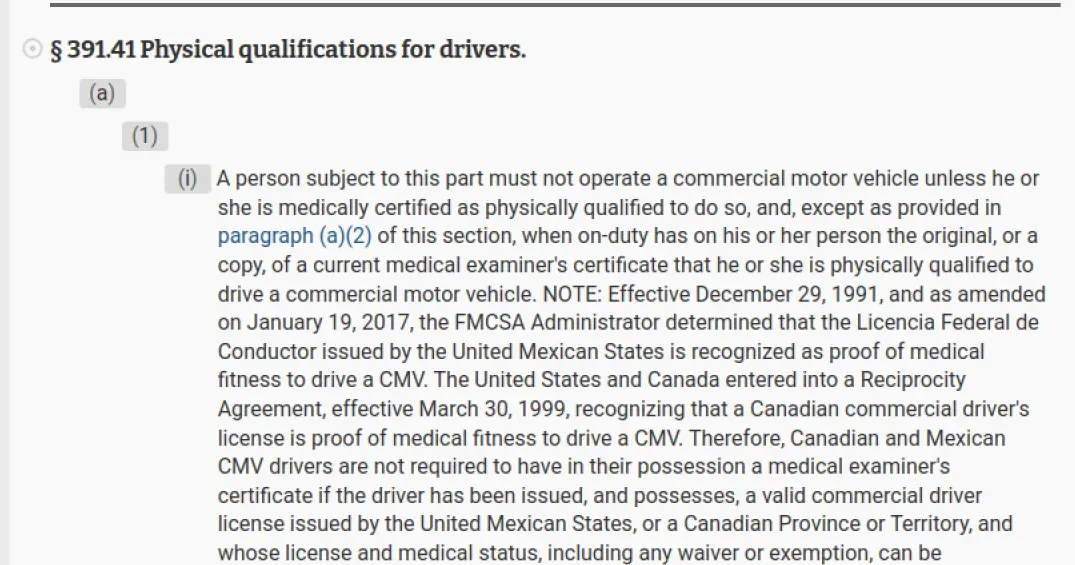
- A DOT physical is required for interstate commercial driving in a vehicle rated 10,001 pounds or more, for passenger-carrying vehicles, and for placarded hazmat loads (49 CFR 391.41). The exam must be done by a medical examiner listed on the FMCSA National Registry — your own doctor cannot do it unless he is on that list.
- Most drivers pay $75 to $150 for the exam, self-pay, with low-cost clinics at $60 to $90 and high-cost providers at $150 to $200 or more. Health insurance rarely covers it, because insurers treat it as a certification rather than medical care (Epic Health Systems DOT physical cost guide, updated 2026-01-21).
- The medical card (Form MCSA-5876) is valid for a maximum of 24 months. Blood pressure decides the length: below 140/90 gets the full two years, 140–159/90–99 gets one year, 160–179/100–109 gets a one-time 3-month certificate and 180/110 or higher means disqualification until the pressure comes down (FMCSA guidance).
- Vision must be at least 20/40 in each eye with or without corrective lenses, with a horizontal field of vision of at least 70 degrees in each eye, and the driver must distinguish red, green and amber traffic signals. Drivers who cannot meet the standard can still qualify through the alternative vision standard under 49 CFR 391.44, in force since March 2022.
- Start renewal at least 30 days before your card expires. A lapsed medical card can lead your state to downgrade your CDL and the reinstatement process is far more painful than the exam itself.
Who Needs a DOT Physical in 2027
Federal law requires a DOT physical for anyone who drives a commercial motor vehicle in interstate commerce: drivers of vehicles rated 10,001 pounds or more — which covers every Class A and Class B truck on the road — drivers who transport passengers for hire and drivers hauling placarded hazardous materials. If you are driving interstate in any of those categories, you need a current medical examiner’s certificate before you drive, not after.
Intrastate rules vary by state. Some states mirror the federal standard exactly; others set their own thresholds or exemptions, particularly for farm vehicles and intrastate-only drivers. If you only drive within one state, check your state licensing agency’s medical requirements.
The physical is also a condition of holding the CDL itself. You cannot get a CDL without a valid medical card and you cannot keep one without renewing the card on time.
That is why the exam matters to new drivers as much as to veterans: our guide to free CDL training money in 2027 covers how to get the licence funded, but the medical card is a separate step you must clear on your own. The same applies to a driver starting a new authority — our guide to starting a trucking company walks through the full setup and the medical certificate sits at the front of that checklist.
The One Rule That Decides Whether Your Exam Counts
Your DOT physical only counts if the person who performed it is listed on the FMCSA National Registry of Certified Medical Examiners. This is the single most common expensive mistake in the whole process.
A driver pays $100 at a clinic, gets a card and discovers weeks later — usually at a roadside inspection or a carrier onboarding — that the examiner was not on the registry and the card is worthless. The exam has to be done again and the money is gone.
Your own doctor cannot do the exam unless he is listed on the registry. Many family doctors are not, because registry listing requires specific FMCSA training and testing.
It does not matter how well your doctor knows your health; what matters is the registry listing. Before you book, search the examiner’s name at nationalregistry.fmcsa.dot.gov, the FMCSA’s free search tool.
Enter your zip code and it returns certified examiners near you. If the name is not there, do not book.
An examiner on the registry follows the federal protocol: the health history review, the vision and hearing screens, the blood pressure check, the urinalysis and the physical examination itself. A clinic that offers a five-minute “drive-through” physical with no paperwork is producing a certificate that may not survive a carrier audit.
What the Exam Checks, Step by Step
The exam follows a fixed federal protocol under 49 CFR 391.41. Here is what happens, in order.
- The health history form (MCSA-5875). You fill this in before the appointment. It asks about every condition, surgery, medication and hospital visit in your history, plus whether you have ever been denied a medical certificate. Fill it in honestly and completely — lying on this form is itself grounds for disqualification.
- Vision screening. Distance acuity in each eye, field of vision and colour vision. Bring your glasses or contacts if you use them — the standard allows corrective lenses and the certificate will simply note that you must wear them while driving. The exact numbers are in the section below.
- Hearing screening. A forced whisper test at five feet in the better ear, or an audiometer test. Hearing aids are allowed and the certificate will note the requirement if you need one. The exact numbers are in the section below.
- Blood pressure and pulse. Taken seated, usually after a few minutes of rest. This is the reading that decides how long your card lasts and it is the one most drivers can improve before the appointment. The blood pressure table is in the section below.
- Urinalysis. A urine sample is tested for protein, blood and glucose — signs of diabetes or kidney trouble. This is not a drug test and it is covered in detail below.
- The physical examination. The examiner checks your general appearance, eyes, ears, mouth and throat, heart, lungs and chest, abdomen, spine and neurological function, including reflexes and balance — looking for anything that would interfere with safely operating a commercial vehicle, not for a perfect bill of health.
- The decision and the card. If you meet the standards, the examiner issues the Medical Examiner’s Certificate, Form MCSA-5876, valid for up to 24 months — shorter (12, 6, or 3 months) when a condition needs monitoring. If you do not meet the standards, the examiner disqualifies you and explains what has to change before you can be certified.
Two things to bring that drivers forget: your glasses or contacts and a list of your current medications with dosages.
Vision and Hearing: The Exact Numbers
Vision and hearing are pass-or-fail numbers, the same in every state because they are federal. There is no negotiating them at the clinic, but there are formal paths for drivers who cannot meet the standard outright.
| Test | Federal standard (49 CFR 391.41) | What it means in practice |
|---|---|---|
| Distance vision | At least 20/40 acuity in each eye, with or without corrective lenses | Glasses and contacts are fine. If you need them to hit 20/40, your card will say so. |
| Field of vision | At least 70 degrees in the horizontal meridian in each eye | The examiner tests each eye separately. |
| Colour vision | Must be able to recognise and distinguish red, green and amber traffic signals | This is about traffic lights, not a full colour-blindness test. |
| Hearing, whisper test | Able to perceive a forced whisper at 5 feet in the better ear, with or without a hearing aid | The examiner stands five feet away, out of sight, and whispers words or numbers. |
| Hearing, audiometer test | Average hearing loss no more than 40 decibels at 500, 1,000 and 2,000 Hz in the better ear | Used when the whisper test is inconclusive. The better ear is what counts. |
The important change for drivers with vision in only one eye, or with vision below the standard in one eye, is the alternative vision standard under 49 CFR 391.44, which has been in force since March 2022. Under the old system, a driver who could not meet the vision standard needed a federal vision exemption — a slow, individual waiver process.
The 2022 rule replaced it with a standardised path: the driver’s treating eye specialist completes Form MCSA-5871, the Vision Evaluation Report, confirming that the driver’s vision is stable and sufficient for safe driving, and the medical examiner can then certify the driver. Turn up without the completed MCSA-5871 and the examiner cannot certify you on the spot.
For hearing, the practical advice is the same: if you use a hearing aid, bring it, wear it for the test and make sure the battery is fresh. A driver who leaves his hearing aid at home and fails the whisper test has failed on a technicality that costs a second appointment and a second fee.
Blood Pressure: The Table That Decides Your Card
Blood pressure is the single most common reason a driver walks out with a short card instead of a two-year card and the one reading most drivers can improve before they sit down. FMCSA medical examiner guidance sets four tiers and the number on the cuff decides the length of the card.
| Blood pressure reading | FMCSA category | What certificate you get |
|---|---|---|
| Below 140/90 | Normal | Full 2-year medical card (Form MCSA-5876) |
| 140–159 systolic or 90–99 diastolic | Stage 1 hypertension | 1-year card. You must get the pressure down and show progress at the next exam. |
| 160–179 systolic or 100–109 diastolic | Stage 2 hypertension | One-time 3-month certificate to bring the pressure down. This is a single chance: if it is still Stage 2 at the follow-up, you are disqualified until it is controlled. |
| 180/110 or higher | Stage 3 hypertension | Disqualified. Once the pressure is below 140/90, you can be certified, initially in 6-month intervals while the examiner monitors it. |
A reading of 148/92 — the example in our worked calculation below — lands in Stage 1 and means a one-year card instead of two. A reading of 165/102 lands in Stage 2 and means a three-month certificate, one follow-up and no second chance at that level. A reading of 182/112 means no card at all until the pressure is controlled and the driver is off the road in the meantime.
Three practical steps. First, if you take blood pressure medication, take it on the morning of the exam and bring the bottle — a missed dose on exam day is the most avoidable cause of a short card.
Second, arrive early and sit for a few minutes before the reading is taken; a rested reading is a lower reading. Third, if your pressure runs high at home, see your own doctor before the exam — the examiner can certify a driver whose pressure is controlled on medication, but not one whose pressure is uncontrolled at the appointment.
The Urinalysis Is Not a Drug Test
The urine sample taken at the DOT physical is tested for three things: protein, blood and glucose. Protein or blood in the urine can signal kidney trouble; glucose can signal diabetes. The examiner is screening for medical conditions that affect safe driving, not for drugs — the sample is not a drug test, it is not sent to a drug-testing laboratory and a positive result leads to follow-up medical questions, not a failed drug screen.
DOT drug testing is a completely separate programme, run by the employer, not by the medical examiner. It uses a different sample, a different laboratory and a different set of rules and its results go to the employer and to the FMCSA Drug and Alcohol Clearinghouse.
Drivers confuse the two because both involve a urine sample at a clinic, but they are different tests for different purposes. Our guide to the drug and alcohol Clearinghouse explains what carriers actually check before they hire you and how the Clearinghouse record follows a driver from job to job.
What Actually Disqualifies You
Federal regulation 49 CFR 391.41 lists the conditions that disqualify a driver, and the conditions that do not disqualify outright but require documentation or monitoring. The distinction matters: drivers regularly assume a diagnosis ends their career when it only means paperwork — and just as often assume a condition is fine when it is an automatic disqualifier.
| Condition | Status under 49 CFR 391.41 | What it means for you |
|---|---|---|
| Epilepsy, or any condition likely to cause loss of consciousness | Automatic disqualifier | No certificate. A seizure exemption exists, but it is narrow — see below. |
| Cardiovascular disease with fainting, chest pain, blood clots or heart failure | Automatic disqualifier | A history of heart attack or cardiac surgery is not itself an automatic fail, but current symptoms are. The examiner will want cardiology records. |
| Respiratory condition that interferes with safe driving | Automatic disqualifier | Severe, uncontrolled breathing problems that affect alertness or function. Well-controlled asthma is not in this category. |
| Mental or psychiatric disorder likely to affect safe driving | Automatic disqualifier | The examiner judges whether the condition or its treatment affects alertness, judgement or impulse control. |
| Loss of a hand, foot, arm or leg | Disqualifier unless holding a Skill Performance Evaluation (SPE) certificate | With an SPE certificate, the driver can be certified. Without it, no certificate. |
| Insulin-treated diabetes | Can qualify with paperwork | Treating clinician must complete Form MCSA-5870 confirming a stable insulin regimen and properly controlled blood sugar (49 CFR 391.46). |
| High blood pressure | Can qualify with monitoring | See the blood pressure table above. Controlled pressure on medication is certifiable. |
| Sleep apnea | Can qualify with treatment | Not a named disqualifier in the regulation, but moderate-to-severe apnea that interferes with safe driving can block certification. See below. |
| Vision below the standard in one eye | Can qualify through the alternative standard | Eye specialist completes Form MCSA-5871 under 49 CFR 391.44, in force since March 2022. |
On seizures, the position is strict but not absolute. The regulation disqualifies a driver with epilepsy or a condition likely to cause loss of consciousness. FMCSA guidance for medical examiners recommends certification only where a driver has been seizure-free for eight years and any anti-seizure medication has been stable for at least two years.
A driver who has had a seizure in the last eight years should expect to be disqualified. There is also a federal seizure exemption process, but it is slow, individual and granted rarely.
On heart disease, the distinction is between history and current condition. A driver who had a heart attack five years ago, recovered and now has normal function with cardiology clearance can be certified.
A driver with current chest pain, fainting episodes, blood clots or heart failure cannot. Bring the cardiology records to the exam.
Diabetes, Sleep Apnea and Other Conditions That Need Paperwork
Insulin-treated diabetes used to be an automatic disqualifier. It no longer is. Under 49 CFR 391.46, a driver with insulin-treated diabetes can be certified if his treating clinician completes the Insulin-Treated Diabetes Mellitus Assessment Form, MCSA-5870, confirming a stable insulin regimen and properly controlled blood sugar.
The examiner can then issue a certificate, usually for 12 months at most, so the diabetes is monitored at every renewal. Turn up without the MCSA-5870 and the examiner cannot certify you, even if your blood sugar is perfectly controlled.
Drivers with type 2 diabetes controlled by oral medication or diet do not need the MCSA-5870. The examiner will still check the urinalysis for glucose, but diet- and tablet-controlled diabetes are routine at DOT physicals and do not block certification when the blood sugar is controlled.
Sleep apnea is the condition drivers most often misunderstand. It is not a named disqualifier in the regulation — there is no line in 49 CFR 391.41 that says sleep apnea disqualifies you.
But an examiner who finds moderate-to-severe sleep apnea that interferes with safe driving can refuse certification, and examiners routinely require a sleep study when a driver has the risk markers: a body mass index over 40, a neck circumference over 17 inches in men or 16 inches in women, loud snoring with witnessed pauses in breathing, or daytime sleepiness. If the study confirms sleep apnea, the driver is usually certified on condition of CPAP treatment, and the examiner will want proof of CPAP compliance — typically usage data showing the machine is used at least four hours a night on at least 70 percent of nights — at the next exam.
What a DOT Physical Costs in 2027
There is no federal fee for the DOT physical. The price is set by the clinic and it varies by region, by provider type and by whether any follow-up is needed. The figures below are the published ranges as of November 2026.
| Provider type | Typical cost | Source and date |
|---|---|---|
| Low-cost clinics and independent urgent care | $60 to $90 | Epic Health Systems DOT physical cost guide, updated 2026-01-21 |
| Average market price, most clinics | $75 to $150 | Epic Health Systems, updated 2026-01-21; BiologyInsights cost guide, 2026 |
| High-cost or specialised providers, high-cost cities | $150 to $200 or more | Epic Health Systems, updated 2026-01-21; LegalClarity cost guide, 2026 |
| CVS MinuteClinic, flat rate | $150 | CVS MinuteClinic listing, reported 2026; $39 for a follow-up visit |
| Follow-up visit (extra documentation or recheck) | $39 and up | CVS MinuteClinic follow-up fee, reported 2026 |
Most drivers pay between $75 and $150 out of pocket and the exam is usually a flat, self-pay fee due at the time of service. Health insurance rarely covers it, because insurers classify the DOT physical as an occupational certification rather than medical care. Some employers pay for the exam — always ask your carrier’s safety department before you pay out of pocket, because company drivers frequently get it covered and owner-operators sometimes get it reimbursed.
Budget for the exam every one to two years and budget more if you carry a condition that needs monitoring. A driver on a one-year card because of blood pressure pays the exam fee every year instead of every two years. None of these are large sums next to a week’s revenue, but they are real costs that belong in your operating budget — the same budget our Form 2290 HVUT guide helps you plan around, since the annual heavy vehicle use tax and the medical card renewal both land on the same yearly compliance calendar.
Worked Example: A Driver With Blood Pressure of 148/92
Take a real driver in a real situation. A 46-year-old company driver goes for his renewal in January 2027. His blood pressure reads 148/92.
His vision is 20/30 in each eye with glasses, his hearing is fine and his urinalysis is clear. Here is the math.
- Exam fee at a mid-range clinic: $110 (within the $75 to $150 most-drivers range, Epic Health Systems, updated 2026-01-21)
- Certificate issued: 1-year card, because 148/92 is Stage 1 hypertension under FMCSA guidance
- Cost per year of certification: $110, because a one-year card means a new exam every year
- Cost per year if his pressure were below 140/90: $55, because the same $110 exam buys a two-year card
- Extra annual cost of the Stage 1 reading: $55 a year until the pressure comes down
Now the follow-up. The same driver sees his doctor, starts a low-dose blood pressure medication and returns for his next exam in January 2028 with a reading of 132/84.
That is below 140/90, so the examiner issues a full two-year card. Over the next two years he pays one $110 exam instead of two, saving $110.
Compare the worst case. Another driver at the same clinic reads 165/102 — Stage 2.
He gets a one-time three-month certificate and must return within three months with the pressure controlled. If he comes back still at Stage 2, he is disqualified until it is under control and he is off the road with no income while he sorts it out.
Renewal in 2027: Start 30 Days Early or Risk Your CDL
The medical card is valid for a maximum of 24 months and shorter when a condition needs monitoring — 12 months, 6 months, or 3 months. The expiry date is printed on the card and it is your responsibility to know it. Your carrier may remind you and your state may send a letter, but the legal responsibility is yours.
Start the renewal at least 30 days before the card expires. That gives you time to get a follow-up appointment if the examiner wants more documentation, to see your own doctor if your blood pressure is high, or to get the MCSA-5870 or MCSA-5871 forms completed if a condition requires them. A driver who books the exam the week his card expires has no slack at all: a single request for extra paperwork means the card lapses before the follow-up happens.
A lapsed medical card is not a parking ticket. When your medical certificate expires, your state licensing agency is required to downgrade your CDL — in most states the downgrade process begins within 60 days of the lapse, according to published guidance checked in November 2026.
A downgraded CDL means you cannot legally drive a commercial vehicle until the card is renewed and the licence is reinstated. Put the expiry date in your phone the day you get the card and set two reminders: one at 45 days out, one at 30 days out.
Renewal is also the moment to keep your other compliance current. Your MCS-150 biennial update runs on a two-year cycle too. Check both dates together, once a year and neither one will catch you out.
Common Mistakes and Watch-Outs
Using an examiner who is not on the National Registry. The exam is worthless if the examiner is not listed.
Search nationalregistry.fmcsa.dot.gov before you book, every time, even if you have used the clinic before — listings change. This is the most expensive mistake in this article, because you pay twice and drive on an invalid card in between.
Paying a clinic that promises a guaranteed pass. No legitimate examiner can guarantee a pass, because the standards are federal and the examiner’s registry listing is on the line. A clinic advertising a guaranteed DOT physical is selling you a certificate that may not survive an audit and a driver caught with a fraudulently issued card can lose his CDL.
Letting the card lapse. The downgrade clock starts when the card expires and reinstatement takes longer than renewal. Start 30 days early, every time.
Hiding a condition on Form MCSA-5875. The health history form asks about every condition, medication and surgery for a reason. A disclosed condition with documentation is a routine certification; an undisclosed condition discovered later is a credibility problem that can end the exam on the spot.
Skipping your medication on exam day. Some drivers stop their blood pressure medication before the exam because they think the examiner wants a “natural” reading.
The examiner wants a controlled reading. Take your medication as prescribed and bring the bottle.
Turning up without glasses, hearing aid, or paperwork. If you need glasses to hit 20/40, bring them.
If you use a hearing aid, wear it with a fresh battery. If you have insulin-treated diabetes, bring the completed MCSA-5870.
If you qualify through the alternative vision standard, bring the completed MCSA-5871 from your eye specialist. Forgetting any of these means a second appointment and a second fee.
FAQ
How much does a DOT physical cost in 2027?
Most drivers pay $75 to $150, self-pay, with low-cost clinics at $60 to $90 and high-cost providers at $150 to $200 or more (Epic Health Systems, updated 2026-01-21). CVS MinuteClinic lists a flat $150, with a $39 follow-up visit if extra documentation is needed. Health insurance rarely covers it, so check whether your employer pays before you pay out of pocket.
How long is a DOT medical card good for?
A maximum of 24 months for a healthy driver. The card is shorter when a condition needs monitoring: 12 months for Stage 1 blood pressure, 6 months for some monitored conditions and 3 months for a one-time Stage 2 blood pressure certificate.
Can I get a DOT physical with high blood pressure?
Yes, if it is controlled. Below 140/90 gets a full two-year card; 140–159/90–99 gets a one-year card; 160–179/100–109 gets a one-time three-month certificate; 180/110 or higher means disqualification until it is below 140/90. Controlled pressure on medication is certifiable — take your medication on exam day and bring the bottle.
Can I get a DOT physical if I only have vision in one eye?
Yes, through the alternative vision standard under 49 CFR 391.44, in force since March 2022. Your treating eye specialist completes Form MCSA-5871, the Vision Evaluation Report, confirming your vision is stable and sufficient for safe driving. Bring the completed form to the appointment — the examiner cannot certify you without it.
Is the DOT physical a drug test?
No. The urinalysis at the DOT physical checks protein, blood and glucose for signs of diabetes or kidney trouble. DOT drug testing is a separate employer-run programme with different samples, laboratories and rules and its results go to the Clearinghouse.
What happens if my medical card expires?
Your state licensing agency can downgrade your CDL, usually within 60 days of the lapse and you cannot legally drive a commercial vehicle until the card is renewed and the licence is reinstated. Start renewal at least 30 days before expiry.
The Bottom Line
The DOT physical in 2027 costs $75 to $150, takes under an hour and is the one appointment that stands between you and your CDL. Get it done by an examiner on the FMCSA National Registry, bring your glasses, your hearing aid, your medication list and any forms your conditions require and start renewal 30 days before the card expires. The drivers who lose their CDL over this exam are almost never the sickest drivers — they are the ones who used the wrong clinic, hid a condition, or let the card lapse.
Related Guides
- MCS-150 Biennial Update in the Motus Era
- Drug and Alcohol Clearinghouse: What Carriers Check Before They Hire
- How to Start a Trucking Company: Step-by-Step Guide
- Free CDL Training Money in 2027: WIOA, Workforce Pell and the GI Bill
- FMCSA English Proficiency (ELP) Practice Test
- Non-Domiciled CDL Rules in 2027: Who Still Qualifies, Who Does Not, and What Happens at Renewal