
Key Points:
- For-hire carriers operating wholly inside Alabama need APSC authority, not an MC number; private carriers hauling their own goods are outside the for-hire system.
- The form follows the freight: Form 14A for general property, Form 14H for household goods, Form 19A for brokers — most at a $100.00 filing fee, payable by cashier's check or money order only.
- Alabama bars the same carrier from holding a common carrier certificate and a contract carrier permit at the same time, so the business model is chosen before filing, not after.
- Intrastate trucks carry the legal company name and the intrastate USDOT number followed by "AL" on both sides. Alabama keeps log books for twelve months against the federal six.
Alabama is a state where the intrastate paperwork looks old-fashioned on purpose: paper forms, notarized applications, cashier's checks and a hearing for some kinds of authority. A new owner-operator who expects every filing to be a quick online checkout will be surprised. A carrier that plans for Alabama's actual process will move faster than one that fights it. The Alabama Public Service Commission (APSC) regulates intrastate for-hire motor carriers. Its Motor Carrier Services Section supervises intrastate authority, insurance filings, annual reports and rates for the carriers it regulates. This guide covers the whole Alabama intrastate picture for 2027 operations: who needs APSC authority, which form and fee apply, what insurance must be filed, how vehicles must be marked and when oversize permits, IRP, IFTA and UCR enter the picture.
Intrastate vs. Interstate in Alabama
A load picked up and delivered inside Alabama is intrastate. A load that crosses a state line, or forms part of a through interstate movement, is interstate — including a short hop from Birmingham to Columbus, Georgia, or from Huntsville to Chattanooga, Tennessee. Alabama's major freight corridors run straight at its borders: I-65 to Tennessee and the Gulf, I-20 and I-59 toward Georgia and Mississippi, I-85 toward Georgia and I-10 along the Gulf Coast. A carrier based near a border will cross it often and should decide early whether the business is genuinely Alabama-only or interstate in practice.
Interstate for-hire work requires federal operating authority from the FMCSA, an MC number, a BOC-3 filing and FMCSA insurance filings. Intrastate for-hire work requires APSC authority instead. No MC number is needed for that intrastate work alone. A USDOT number is still required. Alabama's marking rule makes the intrastate character of the number visible on the truck itself, as described below. If you run both kinds of freight, hold both authorities before hauling the loads that need them and keep their renewals on separate tracks.
Private carriers hauling their own goods do not need APSC for-hire authority. The APSC states the point directly: intrastate authority covers a for-hire passenger or property carrier conducting activities between points wholly within the state. It does not include carriers that haul their own property or passengers. A private fleet still needs a USDOT number where thresholds are met, vehicle registration, safety compliance and oversize permits where loads exceed legal limits. If you haul for others for pay, even for one customer, you are for-hire and should apply.
Who Needs APSC Authority
Any for-hire carrier transporting property or passengers for pay between points wholly within Alabama needs APSC authority. That includes general property carriers, household goods carriers, charter and passenger carriers, taxi operators in the APSC system, commuter carriers and brokers operating under an APSC broker license. The form you file depends on the operation. Choosing the wrong form is the first delay most new applicants cause themselves.
One structural rule deserves emphasis: under Alabama's Motor Carrier Act, the same carrier cannot hold both a common carrier certificate and a contract carrier permit at the same time. A common carrier holds itself out to serve the public generally, under a certificate and faces a public-convenience-and-necessity showing that can include a hearing. A contract carrier serves specific customers under contract, under a permit. Decide which model your business actually is before you file, because you cannot hedge by holding both. If your customer base changes from contract work to general public service, or the reverse, that is a change of authority to handle through the APSC, not a second filing to stack on top of the first.
Applying for APSC Authority: Forms, Fees and Insurance
The application process starts with the correct APSC form, filed with the standard business details: legal structure, owners or officers, principal business address and fleet information including vehicle types and the number of units to be operated. Property carriers and passenger carriers use different forms. Household goods carriers use their own form, so match the form to the freight before you start writing.
The APSC publishes the following intrastate application forms and filing fees. Property carriers other than household goods use Form 14A, with a $100.00 filing fee. Household goods carriers use Form 14H, with a $100.00 filing fee. Charter bus carriers use Form 14CB, with a $100.00 filing fee. Other passenger carriers, including taxi operators not in charter service, use Form 14, with a $100.00 filing fee. Commuter carriers use Form 16, with a $100.00 filing fee. Air carriers use Form 20, with a $100.00 filing fee. Brokers use Form 19A, with a $100.00 filing fee. Nonprofit passenger carriers use Form 18, with a $10.00 filing fee. Transfer or lease applications use Form 11, with a $25.00 filing fee.
Property carriers other than household goods use Form 14A, with a $100.00 filing fee.
Payment method is a trap for the unprepared: payments must be made by cashier's check or money order only. The APSC does not accept cash, personal checks, or company checks. An application sent with a company check will not be processed. The delay is entirely avoidable. Buy the cashier's check or money order before you mail the packet and keep a copy of everything you send.
Along with the application and fee, a property carrier should include a motor vehicle list, a financial statement and a description of its safety program. Household goods applicants also submit a tariff. Broker applicants submit articles filed with the Alabama Secretary of State, where the applicant is a corporation or LLC and a surety bond. Property and household goods applicants that are corporations or LLCs likewise submit their Secretary of State articles. Individual and partner applicants must comply with the proof of United States citizenship requirement in Alabama law by submitting the prescribed form. Read the form's own instructions for your category before filing, because the appendices differ by carrier type and an incomplete packet is returned rather than repaired by the staff.
Insurance is a hard gate. It has two forms in Alabama. The APSC will not grant authority until insurance filing requirements are satisfied. Property carriers file Form E, the uniform motor carrier bodily injury and property damage liability certificate, from their insurer. Household goods carriers also file Form H, the cargo insurance certificate. All insurance filings must be written in the full and correct name under which the APSC certificate or permit was issued and must show a physical address, not a post office box. If the name or address changes, contact the APSC Motor Carrier Services office promptly rather than letting a mismatch sit on file. The minimums themselves sit in the Alabama Administrative Code's motor carrier rules. For equipment used exclusively in the transportation of property, the liability minimums are $100,000 for bodily injury to or death of one person, $300,000 for bodily injury to or death of all persons injured in any one accident and $50,000 for loss of or damage to property of others, cargo excluded. For common carriers of property, the minimum cargo security is at least $5,000, or the maximum value of cargo ordinarily carried if that is lower, but never less than $1,000. Passenger limits differ by seating capacity, so a passenger carrier should read its own row of the table. Shippers and brokers will usually require higher limits than any state minimum in any event, so confirm contract requirements before quoting freight.
For a common carrier certificate, expect the process to include a hearing and a public-convenience-and-necessity determination. Common carrier applicants must advertise their application in a newspaper of general circulation in each county in which service is proposed and submit proof of publication. Newspapers should not be confused with a formality: a missed county is a procedural defect. If a protest is filed, the application goes to a hearing. Contract carrier applicants face a different test, based on the needs of the contracting customer rather than the public generally. Do not promise a customer a start date until the certificate or permit is in hand.
Marking, Safety and Recordkeeping in Alabama
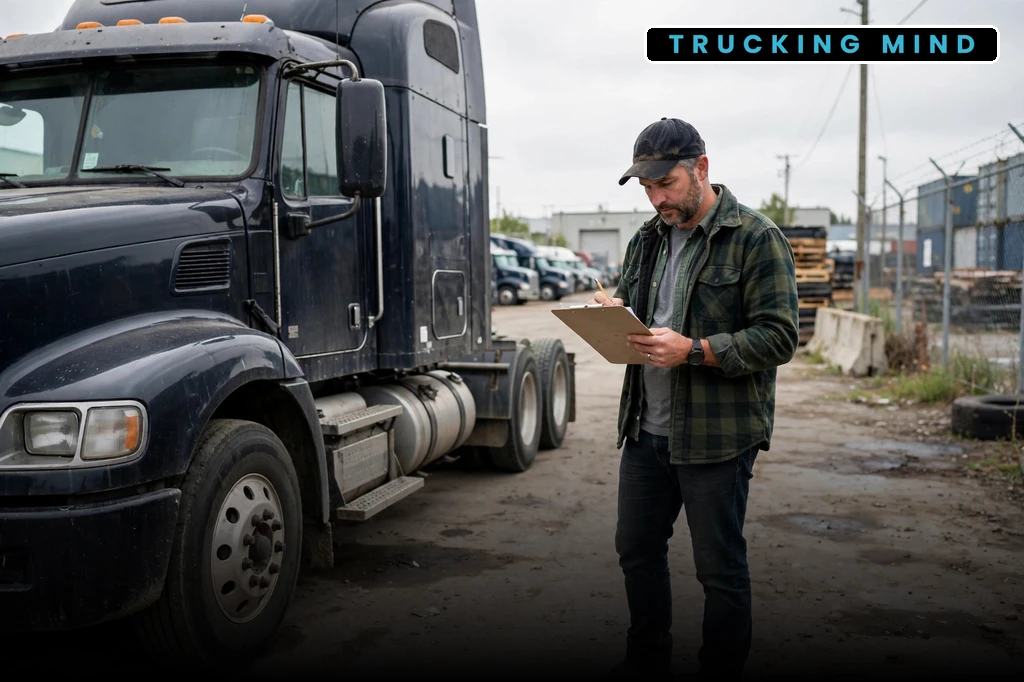
Alabama requires that all commercial motor vehicles traveling only within its borders display the legal company name and an intrastate USDOT number followed by the designation "AL," on both sides of the truck. The legal company name means the business entity that owns or controls the operation, or the doing-business-as name as it appears on the registration forms. Mark both sides, keep the lettering legible and keep the marking consistent with the name on the certificate and the insurance filings. A truck marked with a trade name that differs from the certificate name invites a stop. A stop that begins with markings often becomes a full inspection.
Alabama has adopted safety rules for motor carriers that closely pattern the federal regulations, including driver qualification, vehicle inspection and maintenance and accident reporting. One Alabama difference new carriers should note is record retention: under federal law, log books must be retained for six months, but in Alabama they must be kept for at least twelve months. Build the longer retention period into your record system from day one, so an Alabama audit does not find records that were lawfully discarded under the federal clock but unlawfully discarded under the Alabama clock. Keep driver qualification files, medical certificates, inspection reports and maintenance records to the federal standard and keep them for the Alabama period.
Household goods carriers and non-charter passenger carriers must also file an annual report with the APSC on or before April 30 of each year. The annual report verifies that the carrier is still in business, confirms that no changes have been made to the name or contact information and includes a financial statement. Nonprofit carriers file quarterly reports, due 30 days after the end of each quarter, listing the nonprofit organizations served, trip dates and rates and charges. Put the April 30 date on the calendar the day authority is granted, because an annual report is easy to forget in the first year of operation and expensive to explain later.
Vehicle Registration, IRP, IFTA and UCR
An Alabama-only carrier registers its trucks in Alabama and does not need IRP apportioned plates or an IFTA license, because both programs are triggered by interstate operation. The saving ends at the state line. A qualifying vehicle that begins running interstate needs IRP registration apportioned by miles in each jurisdiction and IFTA licensing with quarterly fuel tax returns through the base jurisdiction. UCR is an interstate program requiring interstate carriers, brokers, freight forwarders and leasing companies to register annually with a base state and pay a fee based on fleet size. A purely intrastate carrier does not file UCR; a carrier with interstate authority does. The APSC's own transportation materials list UCR under interstate operations for exactly this reason.
Federal Heavy Vehicle Use Tax applies at 55,000 pounds taxable gross weight or more regardless of whether the operation is intrastate or interstate. File IRS Form 2290 and keep the stamped Schedule 1 with the vehicle record. Alabama vehicle registration is a separate step from APSC authority: authority lets you haul for hire inside Alabama, registration lets the truck run on public roads. Both must be current. Confirm that the vehicle list on file with the APSC matches the trucks actually operating and update it when units are added or removed.
Oversize and Overweight Permits in Alabama
Legal operation without a permit in Alabama means staying within 8 feet 6 inches of width, 13 feet 6 inches of height, 75 feet of overall length and 80,000 pounds gross weight, with standard axle limits. Exceed any of those limits and the carrier must hold an Alabama Department of Transportation (ALDOT) oversize or overweight permit for the move. The permit states its route, travel conditions, escort, flag and sign requirements. Those conditions control over any general summary. The current ALDOT schedule prices single-trip permits by weight: $10.00 for 80,001 to 100,000 pounds, $30.00 for 100,001 to 125,000 pounds, $60.00 for 125,001 to 150,000 pounds and $100.00 over 150,000 pounds, with an extra $10.00 when the load is also over a dimensional maximum. A single-trip permit is valid for five days and covers one round trip, loaded one way and returning empty or the reverse. Annual permits for heavy commodities or equipment cost $100.00. Travel is restricted to daylight hours. Permitted vehicles may not travel at any time on Sundays, New Year's Day, Memorial Day, Independence Day, Labor Day, Thanksgiving Day or Christmas Day. Escorts are load-specific: Alabama's rules require, among other cases, a front escort with a height pole for loads over 15 feet 6 inches high, one front or rear escort for loads 12 to 14 feet wide depending on the road and front plus rear escorts for loads over 14 feet wide or over 125 feet long. Do not assume a permit for one load, route, or configuration covers a different load or route and do not dispatch a permitted load before the permit is in hand.
Alabama's freight geography shapes its oversize work. Mobile's port and industrial corridor, Birmingham's steel and manufacturing freight, Huntsville's aerospace and defense work and the agricultural and timber freight of the rural counties all generate loads that test legal limits in different ways. Timber, steel coils, machinery and prefabricated structures each carry their own securement and routing questions. A carrier that hauls them should confirm commodity-specific securement rules rather than relying on general flatbed practice. Hurricane-season weather on the Gulf Coast is a further planning factor: high winds and flooding close routes and terminals. A permitted load scheduled through a storm window should be rescheduled early, not driven into deteriorating conditions.
Common Mistakes New Alabama Carriers Make
The first mistake is paying with a company check or cash and having the application sit unprocessed. The second is filing the wrong form — a general property form for a household goods operation, or a passenger form for a property operation — and restarting the clock. The third is filing insurance in the wrong name, or with a post office box address and discovering the mismatch only when authority is delayed. The fourth is trying to hold both a common carrier certificate and a contract carrier permit at the same time, which Alabama law does not allow for the same carrier. The fifth is hauling interstate freight on intrastate authority because a border load looked short. The sixth is discarding logs after six months, in compliance with the federal rule but in violation of Alabama's twelve-month rule. The seventh is forgetting the April 30 annual report for household goods and non-charter passenger authority. Every one of these mistakes is a paperwork mistake. Paperwork mistakes are the cheapest kind to prevent: read the form, use the right payment, match the names and put every deadline on one calendar.
Frequently Asked Questions
Do I need APSC authority to haul only inside Alabama?
Yes, if you haul for hire. For-hire property or passenger carriers operating wholly within Alabama need an APSC certificate or permit. Private carriers hauling their own goods do not need for-hire authority, but still need USDOT identification, registration and safety compliance.
What form and fee apply to a general property carrier?
Form 14A, with a $100.00 filing fee, payable by cashier's check or money order only. Household goods carriers use Form 14H, also with a $100.00 fee, plus a tariff and cargo insurance filing. Brokers use Form 19A, also with a $100.00 fee, plus Secretary of State articles and a surety bond.
Can I hold both a common carrier certificate and a contract carrier permit?
No. Under Alabama's Motor Carrier Act, the same carrier cannot hold both at the same time. Choose the model that matches your business — serving the public generally, or serving specific customers under contract — and file for that authority.
What insurance must I file with the APSC?
Property carriers file Form E liability insurance from their insurer. Household goods carriers also file Form H cargo insurance. Filings must be in the full and correct certificate name with a physical address. The minimum limits for your category are set in the Alabama Administrative Code's motor carrier rules; for property equipment they are $100,000, $300,000 and $50,000, with cargo security of at least $5,000 for common carriers of property.
How must I mark my truck for Alabama intrastate operation?
Display the legal company name and the intrastate USDOT number followed by "AL" on both sides of the truck, with the name matching the registration forms. Keep markings legible and consistent with the certificate and insurance filings.
Do I need IRP, IFTA, or UCR for Alabama-only work?
No. Those are interstate programs. They become required when qualifying vehicles operate across state lines. A purely intrastate carrier registers in Alabama, while an interstate carrier adds IRP, IFTA and UCR.
What are Alabama's legal size and weight limits?
Width 8 feet 6 inches, height 13 feet 6 inches, overall length 75 feet and gross weight 80,000 pounds, with standard axle limits. Beyond those limits, obtain an ALDOT oversize or overweight permit before the move.
Where should a new owner-operator start?
Start with the operating plan — Alabama-only or interstate, general freight or household goods, common or contract carriage — and let it choose the form. The startup sequence is covered in How to Start a Trucking Company. The difference between the two federal numbers is explained in MC Number vs DOT Number.
This guide was prepared in good faith from official sources, including FMCSA and state agency publications, and was checked at the time of writing. Fees, rules and procedures change. Errors and omissions are excepted. Please confirm current requirements with the relevant agency before filing or travelling. If you spot anything that needs correcting, email us at contact@truckingmind.com — we will verify it and update this page.