

Key Points:
- Onike H. Nevins Sr., a seasoned owner-operator in trucking for more than a decade, calls reefer work an intense, unforgiving grind that demands time, money and everything.
- Unlike a company driver with no expenses, an owner-operator pays every breakdown, bill, fuel, toll, tax and permit out of his own pocket.
- He keeps his reefer trailer strictly between 20 and 30 degrees; if refrigeration fails, cargo spoils and his insurance must foot the bill.
- He acts as his own dispatcher, handling load boards and paperwork, complains brokers lack transparency, and advises rookies to go slowly, learn the road and truck, and always do a pre-trip inspection.
By Saleem Mubarak
Behind the steering wheel of a temperature-controlled reefer truck, the highway doesn't look like a postcard. To Onike H. Nevins Sr., a seasoned owner-operator who entered the trucking industry more than a decade ago simply to try something new, the open road represents one thing: an intense, unforgiving grind.
"This job is the most hectic job in the world you would ever find," Onike says flatly, his voice carrying the weight of countless sleepless nights and missed hot meals.
"It is very demanding. It demands your time, demands your money, demands everything."
For years, the romanticized myth of the American trucker has promised a life of free sightseeing and easy cruising. But Onike is quick to shatter that illusion, drawing a sharp, realistic line between corporate company drivers and independent owner-operators.
"It depends on who you talk to," Onike explains. "If you talk to a company guy who has no expenses, he just drives the truck and gets his pay on the weekend. When the truck breaks, he calls his boss, and his boss gives him a new one. But when you talk to an owner-operator? Every expense comes out of your own pocket. Every breakdown, every bill, the fuel, the tolls, the taxes, the permits. Everything."
Driving for the Next Generation
To shield his family from the brutal isolation of the long haul, Onike deliberately keeps his routes local. He refuses to chase distant horizons or indulge in romantic ideas about "dream road trips." When asked what his ideal route looks like, he gives a pure businessman's answer: "Whatever route pays the best. That is my dream."
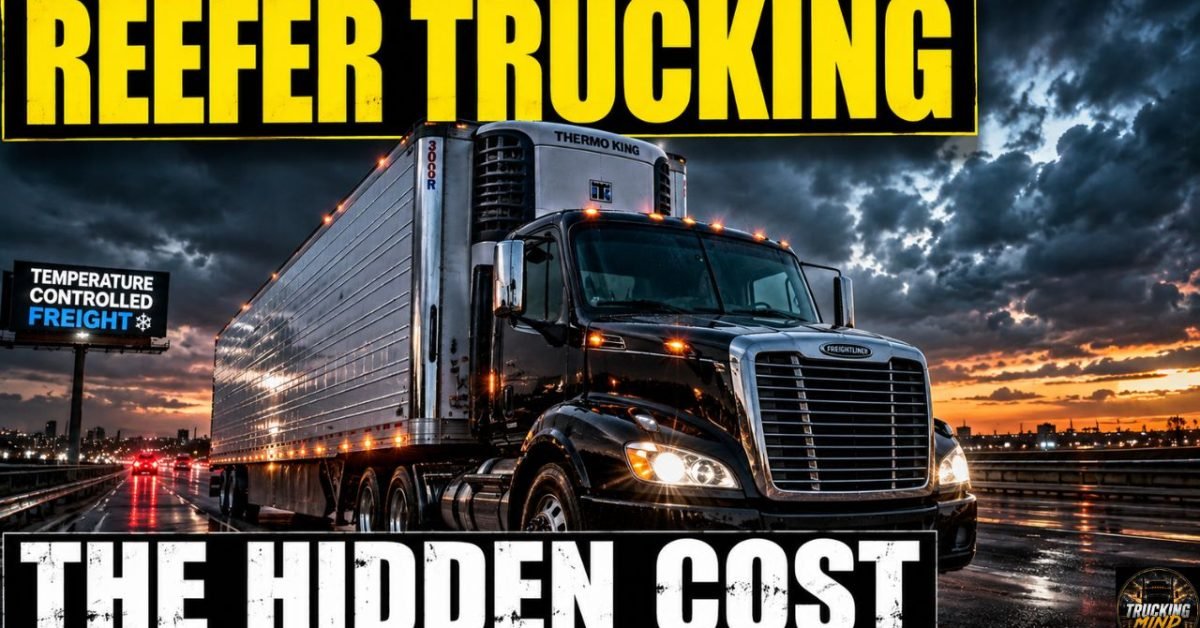
Onike hauls temperature-controlled reefer loads, keeping his trailer strictly between 20 and 30 degrees. It is a stressful, high-stakes game; if the refrigeration unit fails, the cargo spoils, and his own insurance has to foot the massive bill. On the road, he doesn’t see beautiful landmarks or funny roadside stories. All he sees is stress, traffic, and the constant threat of accidents.
Yet, despite the physical and mental toll that driving takes on his body, Onike climbs back into the cab every single day. His exhaustion evaporates when he thinks about his children.
"I want to build a better future for my kids from trucking, and that is what keeps me motivated," he says softly. "I want my kids to have a better life than what I had. I want to send them to good schools and see all of them go to a university. I want them to have a truly good future."
Playing the Broker's Game
Because money is tight and expenses are high, Onike acts as his own dispatcher, handling his own load boards and paperwork to keep extra percentages from flying out of his wallet.
"There are so many people in our pockets already," Onike laughs cleanly. "You have to pay factoring fees, fuel, and insurance. If you are a single driver just starting out, hiring a dispatcher makes it hard to survive. If you can stop some of that money from coming out of your pocket, you can actually save."
Operating completely on his own has given Onike a front-row seat to the deepest flaws in the American freight ecosystem. His biggest grievance? The complete lack of broker transparency, which turns daily business negotiations into a blind gamble.
"Dealing with these brokers is exactly like fishing," Onike warns. "You throw out a hook, but you have no idea if you're going to catch a big fish, a small fish, or a medium-sized fish. When you are out here negotiating your hard-earned money, these brokers don't want to pay you. They want to give you what they think is best for you, and that’s not right. The truckers deserve to get more money."
Learning the Game Slowly
Despite the current market pressures, Onike's blueprint for the future is ambitious.
Operating with just one truck and a single trailer right now, he plans to expand his fleet in the very near future. Once he adds a second truck to his MC authority, he smiles, he will finally swallow the expense and hire a professional dispatcher to help manage the growth.
For the rookie drivers looking to buy their first truck and enter today's volatile market, Onike offers a vital, unvarnished piece of advice:
"Just go slowly and learn the game properly," he counsels. "Take it easy. Learn the road, learn your truck, and always do your pre-trip inspection. A lot of people think it’s nothing, but a good pre-trip catches the broken tire, the missing nut, the loose belt, or the broken light before it turns into a massive, expensive disaster on the side of the highway."