
Key Points:
- Rate per mile is not profit: weekly profit equals rate per loaded mile times loaded miles, minus deadhead and operating costs — a steadily utilized box truck can out-earn a higher-rate hotshot rig with long waits.
- Licensing decides the freight you can take: a box truck rated 26,001 pounds GVWR or more needs a Class B CDL, and a hotshot combination rated 26,001 pounds or more with a trailer rated over 10,000 pounds needs a Class A CDL.
- A box truck usually enters cheaper — one unit to buy, insure, and maintain, with used trucks starting in the mid-five figures — while a hotshot rig means a heavy-duty pickup plus trailer and securement gear.
- Reported ranges put standard box truck freight around $1.75 to $2.25 per loaded mile and hotshot around $1.50 to $3.00 or more, with urgent and specialized loads higher; both models need a $750,000 federal liability minimum, with brokers commonly requiring $1 million in liability and $100,000 in cargo coverage.
- The honest 2027 answer: the box truck is the safer, steadier money with more nights at home; hotshot is the higher-ceiling, higher-variance money for operators near construction, industrial, or energy demand.
New to authority? Start with How to Start a Trucking Company for the full setup sequence, and use MC Number vs DOT Number to sort out which numbers you actually need.
Ask ten owner-operators whether a box truck or a hotshot rig makes more money and you will get ten confident answers, most of them contradicting each other. That is because the question, as usually asked, is incomplete. Rate per mile is not profit. Gross revenue is not take-home pay. And the model that makes one operator money can lose another operator money, depending on license, capital, freight access, home time, and tolerance for irregular work.
This guide compares box trucks and hotshot trucking honestly for 2027: what each model actually is, what it costs to start, what it pays per mile and per week in practice, what the CDL and compliance rules require, and which operator each model fits best. By the end, you should be able to answer a better question than "which makes more money in general?" — namely, "which makes more money for me, on the freight I can actually get, with the costs I will actually carry?"
What Each Model Really Is
A box truck is a single straight truck with an enclosed cargo box, typically 10 to 26 feet long. Freight loads through a rear door, often with a liftgate, and stays enclosed and protected from weather. Typical work includes furniture and appliance delivery, retail restocking, local and regional palletized freight, moving jobs, and less-than-truckload deliveries that need a smaller vehicle than a semi. Because the truck is one unit, there is no trailer to couple, uncouple, or maneuver separately, and loading is usually straightforward dock or liftgate work.
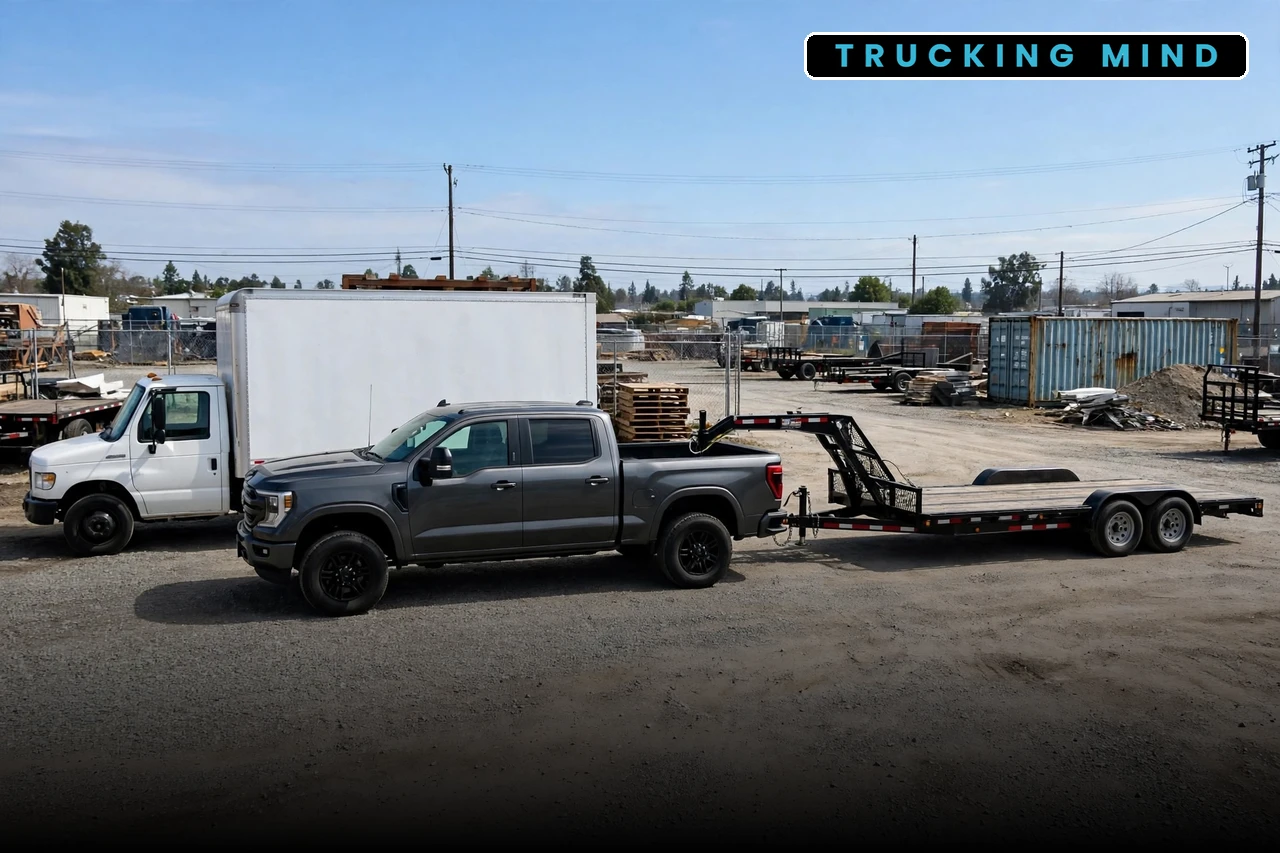
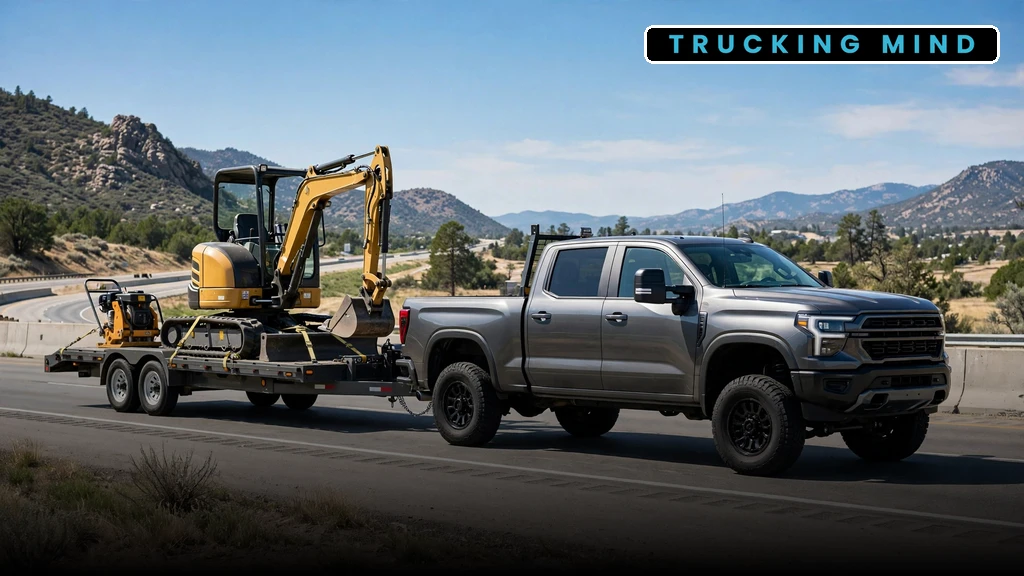
Hotshot trucking is different in kind, not just in size. A hotshot operator uses a heavy-duty pickup truck — commonly a one-ton dually — pulling a flatbed, gooseneck, or step-deck trailer, typically 20 to 40 feet long, to move time-sensitive, smaller, or partial loads. Typical work includes construction equipment, farm machinery, oilfield and industrial equipment, vehicles, and expedited freight that cannot wait for a full truckload schedule. Loads are often open-deck, which means the operator secures freight with chains, straps, and tarps, and handles loading and unloading with more physical work and more attention to securement than enclosed box freight usually requires.
The lifestyle difference matters as much as the equipment difference. Box truck work skews local and regional, with more predictable days and more nights at home, especially for operators focused on local delivery and retail freight. Hotshot work skews urgent and irregular: a high-paying load may require leaving quickly, running at odd hours, and waiting between jobs for the next urgent call. Neither lifestyle is better in the abstract. One of them will fit your life far better than the other, and that fit affects whether you stay in the business long enough for the money to compound.
The CDL Question Changes Everything
Licensing is where many comparisons go wrong, because both models can be run with or without a CDL — but only within strict weight limits that many beginners misunderstand.
For a box truck, the federal rule is about the single vehicle: a truck with a Gross Vehicle Weight Rating (GVWR) of 26,001 pounds or more requires a Class B CDL. Most non-CDL box trucks are therefore built to 26,000 pounds GVWR or less, and a 26-foot truck under that line is the standard non-CDL workhorse. Check the manufacturer's certification label and title before buying, because the rating, not the seller's description, controls.
For hotshot, the rule is about the combination. A Class A CDL is required when the truck-and-trailer combination is rated at 26,001 pounds or more and the towed unit is rated over 10,000 pounds, with actual weights also counting if they are greater than the ratings. That means a one-ton dually rated at 14,000 pounds paired with a gooseneck trailer rated at 12,000 pounds totals 26,000 pounds and generally does not require a CDL federally, while the same truck paired with a heavier trailer that pushes the combination to 26,001 pounds or more does. Some states are stricter — California, for example, requires a CDL to tow a trailer rated over 10,000 pounds — so check your home state and every state you plan to run in, not just the federal rule.
The practical consequence is a payload trade-off. A non-CDL hotshot operator must keep the combination rating at or under 26,000 pounds, which limits legal payload once the empty weight of truck and trailer is subtracted. A CDL hotshot operator can run a heavier combination and haul larger machinery at higher rates, but must invest in CDL training and meet full CDL compliance, including drug and alcohol testing and Clearinghouse requirements. A non-CDL box truck operator faces no such combination math, but is limited to enclosed freight that fits the box. License strategy is therefore not a footnote. It is the first decision, because it determines what freight you can legally accept.
Startup Costs: Box Truck Usually Enters Cheaper
Startup cost is the box truck's clearest advantage. A used box truck can be found at a wide range of prices depending on age, mileage, and condition, and industry guides report used box trucks starting in the mid-five figures, with the truck purchase separate from insurance, filings, and operating float. The single-unit setup also means one vehicle to inspect, maintain, insure, and register, and no trailer purchase or trailer maintenance program on day one.
Hotshot startup costs run higher, because you are buying two units, not one. Industry guides report new one-ton dually and gooseneck combinations commonly in the low six figures, with used combinations often in the mid-five figures to just under six figures depending on truck age, trailer length, and condition. Add trailer-specific costs: tires, brakes, lights, decking, chains, straps, tarps, and binders for securement, plus the maintenance of a pickup that will tow heavy loads daily. A CDL, if required for your combination, adds training time and cost on top of that.
That cost gap does not automatically make the box truck more profitable. It makes it easier to enter with less capital at risk, and easier to survive a slow first month, because fixed costs are lower. Hotshot's higher entry cost buys access to heavier, more urgent freight that can pay more per load. Whether that access is worth the price depends on whether you can actually book that freight consistently — which brings us to rates.
Rates Per Mile: Hotshot Often Wins Per Mile, and That Is Not the Whole Story
On headline rate per mile, hotshot frequently looks better. Industry guides report standard box truck freight commonly around $1.75 to $2.25 per loaded mile, with expedited and specialized box freight higher on tight lanes, while hotshot rates are commonly reported around $1.50 to $3.00 or more per loaded mile, with urgent, specialized, or oversized loads reaching higher on the best lanes. Short hotshot runs can also pay very well per mile because a shipper paying for speed cares less about distance and more about getting equipment or parts moving now.
But rate per mile is only one input, and it can mislead badly if you ignore the rest of the equation. Three factors turn a high per-mile rate into mediocre weekly profit. First, deadhead: a hotshot load that pays well going out but leaves you hundreds of empty miles from the next load earns far less per total mile than the headline suggests. Second, utilization: urgent freight is lumpy by nature, so a hotshot operator may have high-rate days separated by waiting days, while a box truck operator on repeat local freight may run steadier, lower-rate days with less downtime. Third, costs: open-deck securement equipment, trailer maintenance, pickup wear under heavy towing, and fuel for a loaded dually all eat into hotshot revenue, while box truck costs concentrate in the single truck, tires, and liftgate maintenance.
Consider a simple illustration, using reported rate ranges rather than any promised earnings. A box truck averaging 2,000 loaded miles in a week at $2.00 per loaded mile grosses $4,000 before fuel, insurance, maintenance, and other costs. A hotshot operator running fewer loaded miles at a higher rate — say 1,200 loaded miles at $2.75 per loaded mile — grosses $3,300 before costs, despite the higher rate. Reverse the utilization and the hotshot operator wins easily. The lesson is not that one number beats the other. It is that weekly profit equals rate per loaded mile, multiplied by loaded miles, minus deadhead and operating costs — and you must estimate all four, not just the first, for your own lanes and freight.
Consistency also differs by freight type. Box truck freight includes a large base of repeatable local and regional work: retail, furniture, appliances, and palletized deliveries that recur weekly. That repeatability supports steadier scheduling and lower deadhead. Hotshot freight includes a larger share of one-off urgent work: a broken machine that must move today, a construction deadline, an oilfield delivery. That urgency supports higher rates but weaker predictability, and it rewards operators who are positioned in the right region, known to the right brokers and shippers, and ready to move quickly. If you value a predictable week, the box truck's steadier base is a real financial advantage, even at a lower headline rate. If you thrive on urgency and can position yourself where it pays, hotshot's rate premium is real too.
Costs, Maintenance, and Downtime
Operating costs differ in shape between the two models, and the shape matters for cash flow. A box truck's costs are concentrated: one engine, one set of tires and brakes, one box and liftgate to maintain, and one insurance policy covering the unit. Maintenance is simpler to schedule and easier to predict, and a breakdown takes one unit out of service — which is bad enough, but the repair scope is contained.
A hotshot rig's costs are spread across two units that wear together. The pickup tows heavy loads daily, which stresses transmission, brakes, tires, and suspension more than unloaded pickup use. The trailer needs its own tires, brakes, lights, bearings, and decking, plus securement equipment that wears and must be replaced. Fuel economy under a heavy towed load is a real cost driver, and operators who tow at highway speed with a loaded gooseneck should budget fuel honestly rather than using the pickup's empty mileage figures. None of this makes hotshot unprofitable — many operators run it profitably for years — but it means hotshot profit is more sensitive to maintenance discipline and to buying a truck and trailer combination that is genuinely up to the work, not just cheap to acquire.
Insurance follows a similar pattern. Both models need commercial liability and cargo coverage for for-hire interstate work, with the federal liability minimum at $750,000 and most brokers requiring $1 million in liability and $100,000 in cargo coverage. Hotshot cargo exposure can be higher per load because open-deck equipment and machinery values vary widely, and some loads require higher cargo limits or specific endorsements, so get quotes for the freight you will actually haul rather than assuming one policy fits both models. Physical damage coverage for both truck and trailer matters for a hotshot operator, since a financed pickup and a gooseneck trailer represent two assets at risk, not one.
Freight Access and Broker Reality
Both models face the new-authority reality: brokers are cautious with new carriers, access widens with a clean delivery record, and the first months are about proving reliability. Within that shared reality, freight access differs.
Box truck freight is broadly available through general and straight-truck load boards, broker relationships, retail and logistics delivery programs, and local direct customers. The local direct channel is a particular strength: furniture stores, appliance retailers, building suppliers, and manufacturers need regular local delivery and value reliability and careful handling. That channel is harder for hotshot to replicate, because hotshot's advantage is urgent, longer-distance, open-deck work rather than repeat local delivery.
Hotshot freight is concentrated in construction, agriculture, energy, and industrial sectors, plus expedited general freight. It is often found through load boards filtered for flatbed and gooseneck equipment, through brokers specializing in expedited and partial loads, and through direct relationships with equipment dealers, rental companies, and contractors. Those relationships can be lucrative and sticky once built, but they take time and regional positioning to develop. An operator based far from construction and industrial demand will struggle to find hotshot freight at premium rates, while an operator based near it may find the phone ringing. Location, in other words, is a bigger variable for hotshot than for box truck work, which exists in nearly every metro area.
Which Makes More Money? The Honest Answer
For most new operators in 2027, the honest answer is: the box truck is the safer, steadier money, and hotshot is the higher-ceiling, higher-variance money. A box truck operator with repeat local and regional freight, controlled costs, and low deadhead can build a stable, profitable single-truck business with lower capital at risk and more nights at home. A hotshot operator with a CDL combination, good regional positioning, strong broker and shipper relationships, and disciplined maintenance can out-earn that box truck operator, especially on urgent and specialized freight — but will also face lumpier weeks, higher startup and maintenance costs, and more irregular hours to do it.
That framing points to a practical decision rule. Choose the box truck if you have limited startup capital, no CDL and no immediate plan to get one, a strong local market for delivery and retail freight, and a preference for predictable days and home time. Choose hotshot if you already hold a CDL or are willing to get one, have capital for a truck and trailer combination, live near construction, industrial, or energy demand, are comfortable with securement work and irregular urgent dispatches, and can tolerate variable weeks in exchange for higher-rate loads.
Also consider a hybrid path that many operators take in practice: start with the model you can afford and staff today, build a clean safety record and broker relationships, and add the other model later only when the first operation is consistently profitable. A box truck business that later adds a hotshot rig, or a hotshot operator who later adds an enclosed box truck for weather-sensitive freight, is diversifying from strength. Starting both at once, with no record and thin reserves, is diversifying from weakness, and it rarely ends well.
A Decision Checklist Before You Buy
Before you commit to either model, answer these questions in writing. What is your license situation, and what combination or vehicle rating keeps you legal? What is your total startup capital after insurance quotes, not before? What freight is actually available in your home region for each model, and who are the brokers and shippers you would call in week one? What are your weekly fixed costs, and how many loaded miles at what rate do you need to cover them plus a margin? How much home time do you need, and how much irregular, urgent work can you actually accept? Which model's worst week can your cash reserve survive?
If you cannot answer those questions with numbers from your own market, you are not ready to choose on rate-per-mile headlines. Get insurance quotes for both models, talk to brokers who move each freight type in your region, and price trucks and trailers in your market. The model that makes more money in 2027 is the one whose numbers work for you, on freight you can actually book, at costs you can actually carry, for a lifestyle you can actually sustain. Choose that one, run it with discipline, and let the profit follow the system — not the hype.
Frequently Asked Questions
Does hotshot trucking pay more than box truck trucking?
Per loaded mile, hotshot often pays more, especially on urgent and specialized loads. Per week, the winner depends on loaded miles, deadhead, utilization, and operating costs. A steadily utilized box truck can out-earn a hotshot rig with high rates but long waits and heavy deadhead, so compare weekly profit, not just rate per mile.
Do I need a CDL for hotshot trucking?
It depends on the combination rating. A Class A CDL is generally required when the truck-and-trailer combination is rated at 26,001 pounds or more and the trailer is rated over 10,000 pounds. Staying at or under 26,000 pounds combined generally avoids the federal CDL requirement, but some states are stricter, so verify state rules before you buy a combination.
Do I need a CDL for a box truck?
Not federally, if the truck's GVWR is 26,000 pounds or less and no other CDL trigger applies, such as passengers or placarded hazardous materials. Check the manufacturer's GVWR label and your state's rules, and remember that interstate commercial operation still requires medical certification and, for for-hire work, a USDOT number and operating authority.
Which is cheaper to start: box truck or hotshot?
A box truck is usually cheaper to start because it is a single unit with no trailer purchase, and used box trucks are available across a wide price range. Hotshot requires a heavy-duty pickup plus a trailer and securement equipment, and a CDL combination adds training cost, so total startup capital is typically higher.
Which offers better home time?
Box truck work generally offers more predictable days and more nights at home, especially for local and regional delivery operators. Hotshot work is more often urgent and irregular, with quick departures and variable schedules, which suits operators who prioritize rate over routine.
Can I switch from box truck to hotshot later, or run both?
Yes, and many operators do, but sequence matters. Build one model to consistent profitability with clean compliance records and a cash reserve first, then add the second model from strength. Running both from day one with thin reserves and no delivery record spreads capital, attention, and compliance risk across two operations at once.
This guide was prepared in good faith from official sources, including FMCSA and state agency publications, and was checked at the time of writing. Fees, rules and procedures change, and errors and omissions are excepted. Please confirm current requirements with the relevant agency before filing or travelling. If you spot anything that needs correcting, email us at contact@truckingmind.com — we will verify it and update this page.