By Ahsan Ali
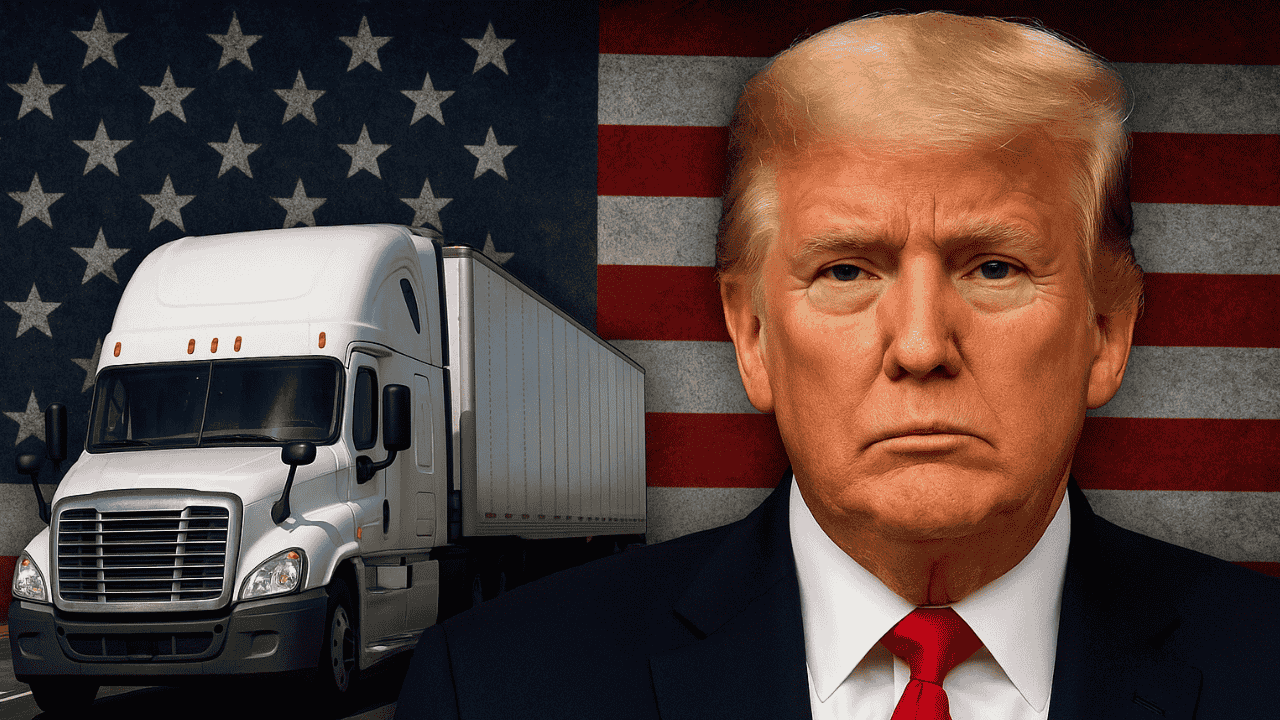
The U.S. trucking sector has experienced a freight recession over the last three years — and Donald Trump’s trade policies are at fault, or at least partially responsible for it, new reports say: Writing on The Hill, Steve DelBianco writes in an opinion piece there that Trump “owes” U.S. House Rep Richard Neal (D-Mass.-1st Dist.), chair of the House Ways and Means…
There are simply too many trucks chasing too little freight, experts say, and for all the recent chatter about automation in long-haul trucking — deploying big rigs that roll down the highway with no one at the wheel at all — it may not be coming soon enough.
To help to address that imbalance, the White House is proposing ways to reduce congestion on the road by tightening scrutiny of truck drivers and making it harder for them to operate by enacting tougher training and licensing rules. This initiative is backed by the Owner-Operator Independent Drivers Association (OOIDA).
In a letter Monday addressed to the chairs and ranking members of the House and Senate transportation committees, OOIDA entered its support for what it called “commonsense reforms. That includes defending against rulemaking on English-language proficiency, preventing unfair practices in issuing commercial driver’s licenses (CDL) to non-residents, improving entry-level driver training and resisting the lowering of professional standards.
These ideas are already being ensconced in fleet regulation courtesy of recent action by the U.S. Department of Transportation (USDOT) and Federal Motor Carrier Safety Administration (FMCSA). That can, for example, be the case with a revived requirement to prove your ability to speak English (it has been put back into service), or an Interim Final Rule that has come out that attempts to preempt how states can issue CDLs to those drivers who don’t have an in-state street address.
Industry experts say such actions could ultimately take a bite out of the ranks of drivers — and trucks — on American highways. But change will take time. FTR, the transportation analysis firm, expects better times for truckers by 2026 and 2027. At this point its Trucking Conditions Index (TCI) nudged up in August to almost neutral at 0.3 from -1.03 in July, driven by slightly improved freight rates.
“‘The prospect of an upturn resulting from reduced capacity has gained a foothold in recent months since limits on commercial driver’s licenses for foreign drivers took effect,” said Avery Vise, FTR vice president of trucking. “But despite the headlines detailing how stricter standards for immigrant drivers might impact (carriers’) business, so far it doesn’t appear the data tells of any major changes in the market.
“We …reexpect these pressures to remain on the rise in the months ahead, albeit it is still unclear as to just how briskly (or sharply) they will push freight conditions.
TD Cowen’s financial analysts, meanwhile, suggested that the new non-domiciled driver rules — however long they last and whatever those end up looking like — might be more significant than the market currently thinks: at least so long as they wind up being enforced across a small number of key states.
“Key will be strong enforcement in Illinois, California and Washington,” the firm wrote to investors in a note. “These states have produced a higher ratio of CDLs, and the Department of Transportation seems to be serious about enforcing it, so this very well will establish an up market place for trucking in 2027.”
But not all in the industry are on board with the approach. Critics warn that tougher standards would be most damaging to the poor, cost jobs and disrupt trade flows. For now, the road to recovery for the trucking industry seems long and uncertain.
Author Profile

-
Ahsan Ali is a technology and business journalist who covers the latest developments in autonomous vehicles and innovative startups.
With a sharp eye for industry trends, he breaks down complex tech stories into clear, engaging insights for general readers.
Latest Entries
 Business3 months agoTrucking Safety Reforms: New Plan Targets Industry Risks
 Business3 months agoOctober 2025 Trucking Slowdown Hits Freight and Capacity
 Business3 months agoAI Electric Trucking Startup NexDash Raises €5M
 Business3 months agoTrucking Industry Crisis: New Rules Threaten U.S. Supply Chain