By Ahsan Ali
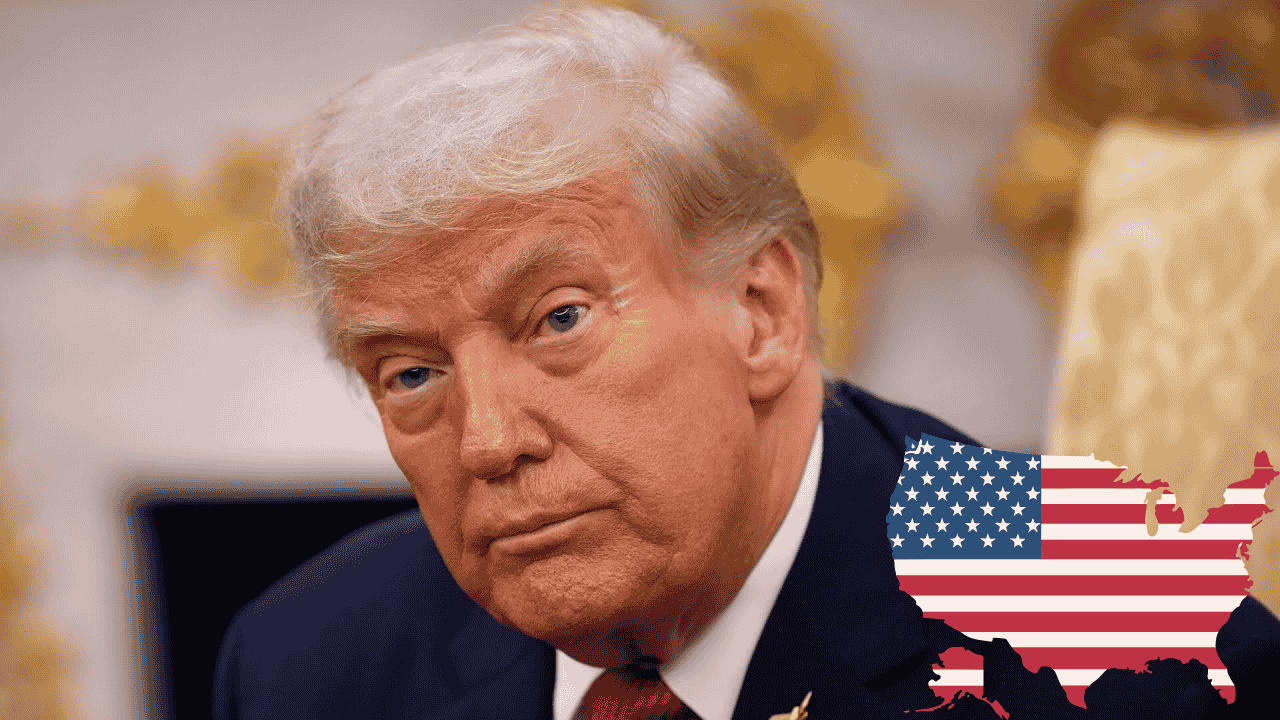
Naturepedic, a Cleveland-area mattress and furniture company, was gearing up to launch a premium upholstered headboard later this year or early 2026. But President Donald Trump’s latest trade move has thrown those plans into uncertainty.
On Thursday night, Trump announced on social media a 30% tariff on imported upholstered furniture. Naturepedic sources its headboards from India and Vietnam.
“Do we move forward and hope for the best?” asked Arin Schultz, Naturepedic’s chief growth officer. “Or are we priced out and forced to cancel the launch? And if we go ahead, do we absorb the cost or pass it on to customers?”
And Naturepedic isn’t alone. Across the U.S., executives in multiple sectors scrambled Friday to understand the implications of Trump’s sweeping tariffs.
The president’s announcement didn’t stop at furniture. He also revealed 100% tariffs on pharmaceutical drugs, 50% on kitchen cabinets and bathroom vanities, and 25% on heavy trucks, effective this Wednesday (local time).
National Security Justification Raises Eyebrows
Trump cited national security as the reason for the new tariffs, including on sofas and vanities. Economists were skeptical. “It’s hard to see how kitchen cabinets are essential to winning the next war,” said Mary Lovely, senior fellow at the Peterson Institute for International Economics.
Thursday’s social media blitz continues Trump’s long-term effort to reshape U.S. trade policy. For decades, American policy encouraged lower trade barriers, but Trump has imposed tariffs on imports from nearly every country, with targeted taxes on steel, aluminum, autos, and more.
Trump argues the tariffs will protect domestic industries, encourage U.S. production, and generate revenue. Customs duties have already brought in $172 billion since the start of fiscal 2025 — up 126% from the same period in 2024 — though they still account for less than 4% of federal revenue.
Businesses Struggle to Understand the New Rules
Analysts, lawyers, and companies are still parsing Trump’s announcements. “We’ve only seen the Truth Social posts,” said Dan McCarthy, a former U.S. Trade Representative official. “We need official details.”
For instance, Naturepedic is unclear whether the 30% furniture tariff adds to an existing 50% tariff on goods from India.
Trump’s plan for pharmaceuticals is ambitious. He has threatened tariffs of 200% to push drugmakers to bring production back to the U.S., said Barry Appleton, trade expert at New York Law School.
Over the years, many drugmakers moved production to China, India, and tax-friendly countries like Ireland and Switzerland. The COVID-19 pandemic exposed the risks of relying on foreign suppliers, particularly geopolitical rivals like China.
Stock prices for major pharmaceutical companies rose after the announcement, and companies including Merck, Eli Lilly, and Johnson & Johnson have already unveiled U.S. expansion plans. Still, analysts warn tariffs could raise drug costs for Americans, especially those without comprehensive health coverage.
Homeowners and Housing Market Face Rising Costs
Tariffs on kitchen cabinets, bathroom vanities, and upholstered furniture are likely to increase the cost of new homes and DIY projects. Lumber and other wood imports are also under investigation, possibly leading to more tariffs.
“The extra costs make owning a home significantly more expensive,” said Jonathan Gold, VP of supply chain and customs policy at the National Retail Federation. “Rapid, unpredictable tariff announcements disrupt supply chains and make planning nearly impossible for retailers.”
A Possible Signal to Mexico
Experts suggest the 25% tariff on heavy trucks may target Mexico, a major producer of trucks, in anticipation of upcoming renegotiations under the U.S.-Mexico-Canada Agreement.
Trump is using Section 232 of the Trade Expansion Act of 1962 to investigate whether imports of pharmaceuticals, lumber, and trucks threaten U.S. national security. He also invoked emergency powers under a 1977 law, though courts have challenged this, and the Supreme Court is reviewing the case.
“Section 232 gives the president a backup plan if other tariffs are struck down,” said Harvard trade professor Robert Lawrence.
Still, some experts question the approach. “The administration identifies a problem and the solution is a big tariff,” said Ted Murphy of Sidley Austin law firm. “Whether it’s strategic is unclear — it’s hard to tell from a tweet.”
Author Profile

Latest Entries
 Business4 months agoImmigrant Truck Drivers CDL Rule Could Cost Thousands Jobs
 Business4 months agoTruck Driver English Language Law Sparks Debate
 Logistics5 months agoTruck Driver English Language Violations Linked to Safety
 Logistics5 months agoCourt Reversal Opens Door to Truckers Demurrage Charges