By Ahsan Ali
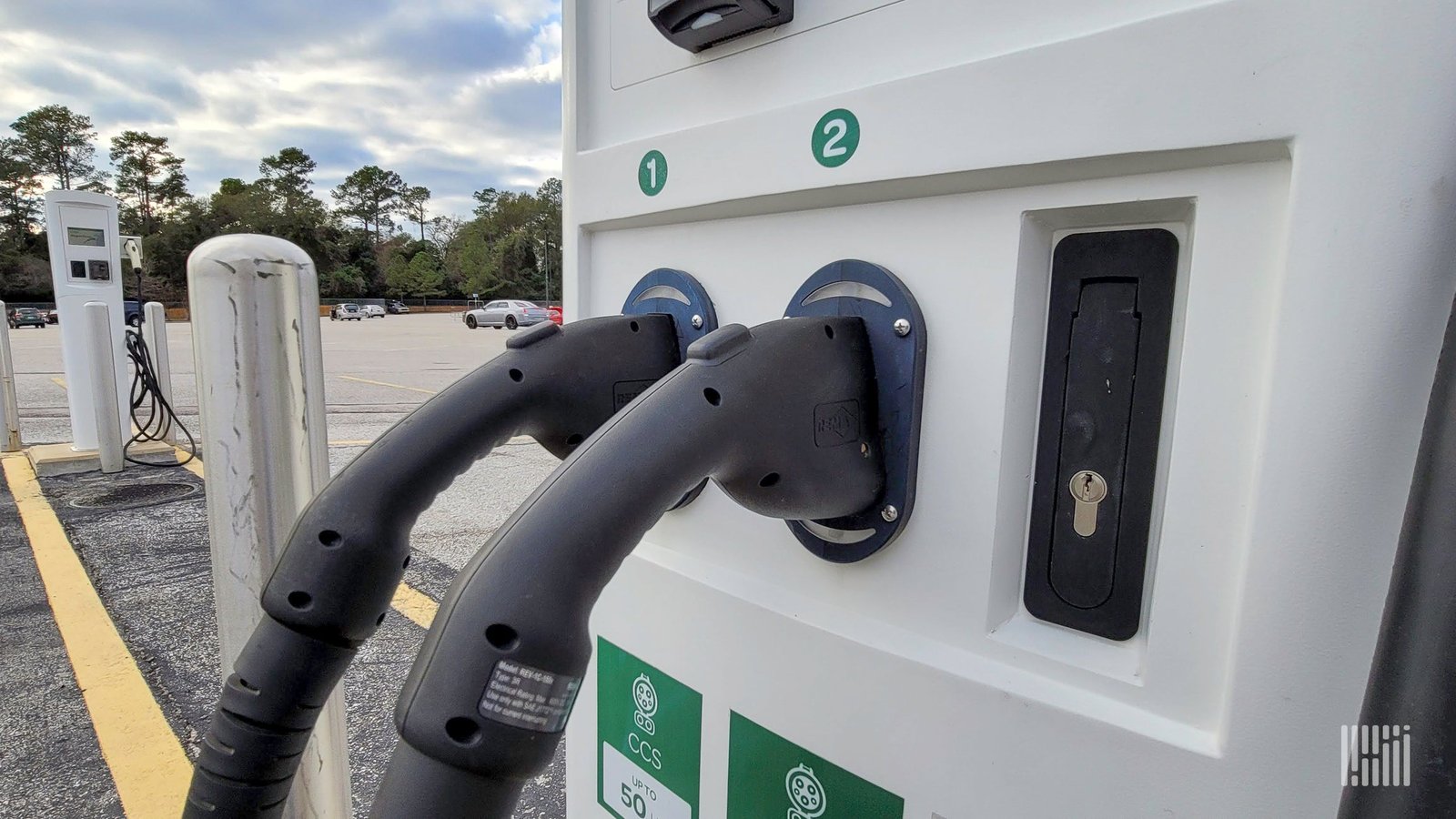
A new study shows that while electric vehicle charging stations are now widely available, many don’t deliver when drivers need them most. ChargerHelp!’s 2025 EV Charging Reliability Report found that 64% of Americans live within two miles of a public charger, yet nearly one out of every three charging attempts fails.
On paper, stations look reliable. Many networks report uptime between 98.7% and 99%. But when researchers tracked more than 100,000 charging sessions at 2,400 different stations, they discovered that only 71% of drivers were able to plug in and successfully charge on the first try.
ChargerHelp! argues that the number people should pay attention to isn’t “uptime” but the first-time charge success rate (FTCSR).
“Uptime only tells us whether the charger is technically on,” said Kameale Terry, CEO of ChargerHelp!, in an interview with FreightWaves. “It doesn’t show if a driver can actually plug in and get energy into their car. First-time charge success reflects what drivers really experience.”
Why So Many Charging Attempts Fail
According to Terry, EV charging isn’t as simple as plugging into a gas pump. Chargers and cars are essentially computers, and they rely on multiple layers of software to talk to each other.
“Every charging session is like a digital handshake,” she explained. “And sometimes, one system doesn’t fully understand the other.”
When updates roll out—whether to the car, the charger, or the software that manages payments—they can create conflicts. A driver might pull up to a station that looks “available,” plug in, and then watch the session fail because the systems can’t sync up.
Tesla avoids many of these issues because it designs its vehicles, software, and charging network together. Other charging providers use equipment and programs from many different companies, which often leads to miscommunication and errors.
Older Stations Make the Problem Worse
The study also uncovered a trend: as chargers age, they become less reliable. New stations usually succeed about 85% of the time, but that drops to around 70% after three years.
The issue comes from outdated parts. Many older stations can’t be upgraded to match new vehicle software or charging standards unless owners replace expensive hardware.
“That means even if a new car works fine on a modern charger, it may not connect properly to older equipment,” Terry said.
Few Rules to Keep Stations in Check
Unlike gas pumps, which must pass regular state inspections, charging stations have little oversight. Government checks mostly focus on whether customers are billed correctly for electricity—not whether the stations actually work.
“Even if the charger doesn’t function at all, it could still pass inspection,” Terry noted. Fleet charging stations, which serve private companies, aren’t covered by these rules at all.
How to Fix It
The report calls for three major changes in the EV charging industry:
- Judge reliability by FTCSR instead of uptime.
- Use preventive maintenance to keep chargers running, rather than patching problems as they arise.
- Develop common standards and share data across companies to improve compatibility.
Terry believes these problems can be solved, just like the challenges faced when cars first replaced horses. “The shift to gasoline wasn’t easy, but we figured it out,” she said. “Now we’re facing a new transition, and we’ll figure this one out too.”
Author Profile
Latest Entries
 Business4 months agoImmigrant Truck Drivers CDL Rule Could Cost Thousands Jobs
 Business4 months agoTruck Driver English Language Law Sparks Debate
 Logistics5 months agoTruck Driver English Language Violations Linked to Safety
 Logistics5 months agoCourt Reversal Opens Door to Truckers Demurrage Charges